Common Patio Cover Mistakes in Louisiana's Humid Climate and How to Avoid Them
Living in Acadiana means embracing a unique climate that is as beautiful as it is demanding. The combination of intense heat, high humidity, and sudden severe storms creates a harsh environment for outdoor living structures. According to the National Weather Service, Louisiana experiences some of the highest humidity levels in the United States, which accelerates the degradation of building materials. Homeowners often overlook how these specific environmental factors impact their patio covers, leading to costly repairs and premature failures. This guide details the most frequent errors made during patio design and installation in Lafayette and surrounding areas, providing actionable advice to protect your investment. (About Us 8211 Acadiana)
Ignoring the Impact of High Humidity
One of the most critical mistakes homeowners make is treating a Louisiana patio cover the same way they would in a dry, arid climate. High humidity acts as a silent enemy to construction materials. It promotes mold, mildew, and rot, particularly in organic materials like wood. When moisture is trapped in the air, it condenses on cooler surfaces, such as metal beams or glass panels, leading to corrosion and structural weakening over time.
Many homeowners fail to account for ventilation in their patio cover design. Without proper airflow, heat and moisture become trapped beneath the roof structure. This creates a greenhouse effect that can damage the underlying deck or flooring. According to environmental data from the Louisiana State University AgCenter, proper ventilation is essential to mitigate heat buildup in enclosed or semi-enclosed outdoor spaces. You must ensure that your patio cover design includes adequate gaps or vents to allow air to circulate freely.
Another common oversight is the lack of moisture-resistant barriers. If you are installing a patio cover over a concrete slab or a wooden deck, you need to ensure that water is directed away from the structure. Poor drainage design can lead to pooling water, which eventually seeps into the foundation or the base of the support posts. This can cause concrete spalling or wood rot, compromising the entire structure. Always specify materials that are rated for high-moisture environments.
Choosing the Wrong Materials for the Climate
The choice of material is the single most important decision in patio cover longevity. Many homeowners are drawn to the aesthetic appeal of natural wood without considering its maintenance requirements in a humid climate. While cypress is a traditional choice in Louisiana due to its natural resistance to rot, it still requires regular sealing and staining. Neglecting this maintenance leads to rapid deterioration.
Aluminum is often a superior choice for Acadiana homeowners. It is lightweight, rust-resistant, and requires minimal maintenance. However, not all aluminum is created equal. Low-quality aluminum can warp under extreme heat or corrode if the finish is compromised. Acadiana Patios & Construction specializes in high-quality materials that withstand these conditions. We use premium-grade aluminum and insulated panels that reflect heat and resist corrosion.
Another mistake is ignoring the benefits of insulated patio covers. In Louisiana, where summer temperatures can soar, an uninsulated metal roof can become an oven. Insulated covers help regulate temperature, making the space usable during the hottest parts of the day. This not only improves comfort but also protects the materials from thermal expansion and contraction, which can cause warping and cracking over time. According to energy efficiency studies, insulated structures significantly reduce heat transfer, leading to lower cooling costs for adjacent indoor spaces.
Underestimating Wind and Storm Resistance
Louisiana is prone to severe weather events, including hurricanes and tropical storms. A common and dangerous mistake is underestimating the wind load requirements for a patio cover. Many DIY kits or low-cost installations are not engineered to withstand high winds. When a storm hits, a poorly anchored patio cover can become a projectile, causing damage to your home, your property, and potentially neighboring properties.
Proper anchoring is critical. The support posts must be set deep enough into the ground or concrete slab to resist uplift forces. In coastal or open areas, wind speeds are higher, requiring even more robust engineering. Homeowners often cut corners on the foundation, using shallow footings that are insufficient for the structural load. This can lead to the entire structure tipping or collapsing during a storm.
Additionally, the design of the roof itself matters. Flat or low-slope roofs can trap debris and water, adding weight and stress to the structure. A proper pitch ensures that water runs off quickly and reduces the accumulation of wind-driven debris. According to building codes in Louisiana, patio covers must meet specific wind resistance standards. Ignoring these codes can result in insurance issues and safety hazards. Always ensure your contractor follows local building codes and engineering standards.
Neglecting Regular Maintenance Routines
Even the best-built patio cover requires regular maintenance. Many homeowners assume that "low maintenance" means "no maintenance." This is a false assumption. In a humid climate, dirt, pollen, and organic matter accumulate quickly on patio covers. This debris traps moisture against the surface, accelerating wear and tear.
Regular cleaning is essential. You should rinse your patio cover at least twice a year to remove dirt and pollen. For aluminum covers, a mild soap and water solution is usually sufficient. Avoid using harsh chemicals that can strip the protective finish. For wood covers, inspect the sealant annually and reapply as needed to prevent water intrusion.
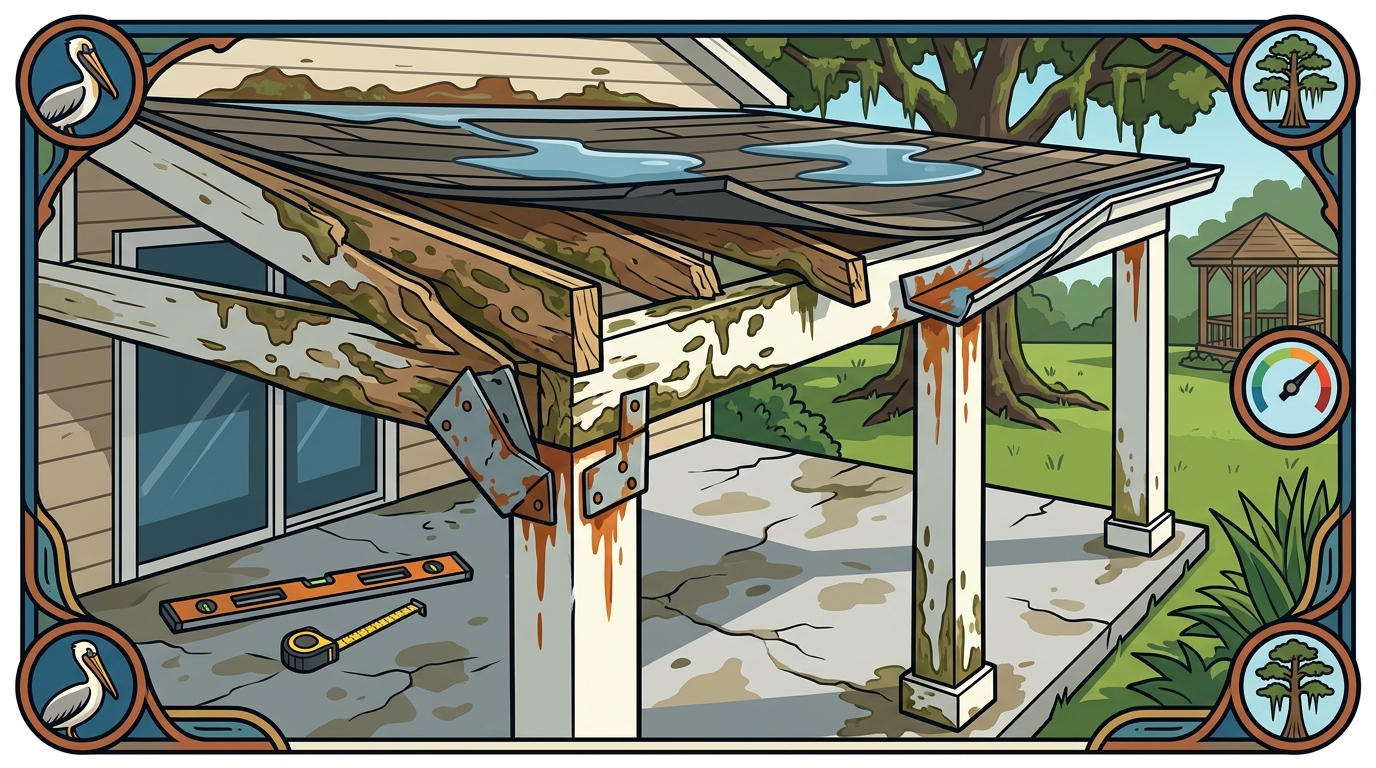
Inspecting the hardware is another critical maintenance task. Over time, vibrations from wind and temperature changes can loosen bolts and screws. Tightening these connections periodically ensures the structural integrity of the cover. Also, check for any signs of rust or corrosion, especially in the joints and fasteners. Addressing these issues early can prevent costly repairs down the line. According to industry standards, proactive maintenance can extend the lifespan of a patio cover by several years.
DIY vs. Professional Installation Risks
The temptation to save money by installing a patio cover yourself is strong. However, the risks associated with DIY installation in Louisiana's climate are significant. Proper installation requires precise measurements, structural engineering knowledge, and specialized tools. A mistake in the framing or anchoring can compromise the entire structure.
Professional installers have the expertise to navigate local building codes and permit requirements. They also have access to high-quality materials that are not available to the general public. Acadiana Patios & Construction has over 30 years of experience in the Lafayette area. Our team understands the specific challenges of the local climate and designs solutions that are built to last. We use only the best products from leading manufacturers, ensuring that your patio cover is durable and aesthetically pleasing.
Furthermore, professional installation often comes with warranties. If you install a cover yourself, you are responsible for any repairs or replacements. With a professional contractor, you have peace of mind knowing that your investment is protected. We are proud members of the Better Business Bureau with an A+ Rating, reflecting our commitment to customer satisfaction and quality workmanship.
Material Comparison for Louisiana Weather
Choosing the right material is crucial for long-term satisfaction. Below is a comparison of common patio cover materials in the context of Louisiana's climate.
| Material | Humidity Resistance | Wind Resistance | Maintenance Level | Best For |
|---|---|---|---|---|
| Aluminum | High | High | Low | Long-term durability and low upkeep |
| Cypress Wood | Moderate | Moderate | High | Traditional aesthetic with natural rot resistance |
| Polycarbonate | High | Moderate | Low | Maximum light transmission and impact resistance |
| Insulated Panels | Very High | High | Low | Temperature control and noise reduction |
Key Takeaways
- High humidity in Louisiana accelerates material degradation, requiring moisture-resistant designs and proper ventilation.
- Aluminum and insulated panels offer superior durability and heat reflection compared to traditional wood in humid climates.
- Wind resistance is critical; structures must be engineered to meet Louisiana building codes for storm safety.
- Regular maintenance, including cleaning and hardware inspection, is essential to prevent premature failure.
- Professional installation ensures compliance with local codes and access to premium, warrantied materials.
- Acadiana Patios & Construction has served Lafayette and Acadiana since 1985, bringing over 30 years of expertise.
- Choosing the right material and design can significantly improve outdoor comfort and reduce cooling costs.
Frequently Asked Questions
What is the best material for a patio cover in Louisiana?
Aluminum is widely considered the best material for Louisiana's humid climate due to its resistance to rust, rot, and warping. It requires minimal maintenance and can withstand high winds when properly engineered.
How often should I clean my patio cover?
You should rinse your patio cover at least twice a year to remove dirt, pollen, and debris. In areas with heavy tree cover, more frequent cleaning may be necessary to prevent moisture trapping.
Do I need a permit for a patio cover in Lafayette?
Yes, most patio cover installations in Lafayette require a building permit. Professional contractors like Acadiana Patios & Construction handle the permit process to ensure compliance with local codes.
Can a patio cover withstand a hurricane?
While no structure is entirely hurricane-proof, a properly engineered and anchored patio cover can withstand high winds. It is crucial to use materials and installation methods that meet local wind load requirements.
What is an insulated patio cover?
An insulated patio cover consists of panels with a foam core sandwiched between metal layers. This design provides excellent thermal insulation, reducing heat transfer and noise, making the space more comfortable.
Why is ventilation important for a patio cover?
Ventilation allows heat and moisture to escape from beneath the roof structure. Without it, trapped heat can damage the underlying deck and create a hot, uncomfortable environment.
How long does a patio cover last in Louisiana?
With proper installation and maintenance, an aluminum patio cover can last 20 to 30 years or more. Wood covers require more frequent maintenance but can also last a long time if cared for properly.
Contact Acadiana Patios for Your Free Estimate
Don't let common mistakes compromise your outdoor living space. Acadiana Patios & Construction is dedicated to providing high-quality patio covers that stand the test of time. Our team of trained professionals is ready to help you design and install a patio cover that is perfect for Louisiana's unique climate. We offer a full range of services, including sunrooms, screened enclosures, and pool enclosures. Contact us today for a free estimate and experience the difference of working with a trusted local expert. Visit our Contact Page to get started.