What should I know before installing a concrete patio in my Lafayette backyard?
Before installing a concrete patio in Lafayette, you must account for the region's high humidity, heavy rainfall, and expansive clay soils. These environmental factors require specific subgrade preparation, proper drainage slopes, and joint spacing to prevent cracking. Acadiana Patios & Construction provides the local expertise needed to navigate these unique Louisiana conditions effectively.
Climate and Soil Impact
Lafayette experiences a humid subtropical climate with significant seasonal temperature swings and high moisture levels. Concrete is a rigid material that expands and contracts with temperature changes. In the Acadiana region, this movement is often exacerbated by the underlying soil composition. Expansive clay soil is a specific type of earth that absorbs water and swells, then dries out and shrinks. This soil movement can exert pressure on a concrete slab, leading to heaving or settling.
Understanding this dynamic is critical for any outdoor project. The ground beneath your patio is not static. It shifts with the seasons. If the subgrade is not properly compacted and stabilized, the concrete will eventually crack along the lines of least resistance. Acadiana Patios & Construction has operated in this specific geographic area since 1985. This long-term presence means the team understands how local soil behaves under different weather conditions. They do not rely on generic national standards. They apply local knowledge to ensure the foundation remains stable year after year.
Design and Aesthetic Choices
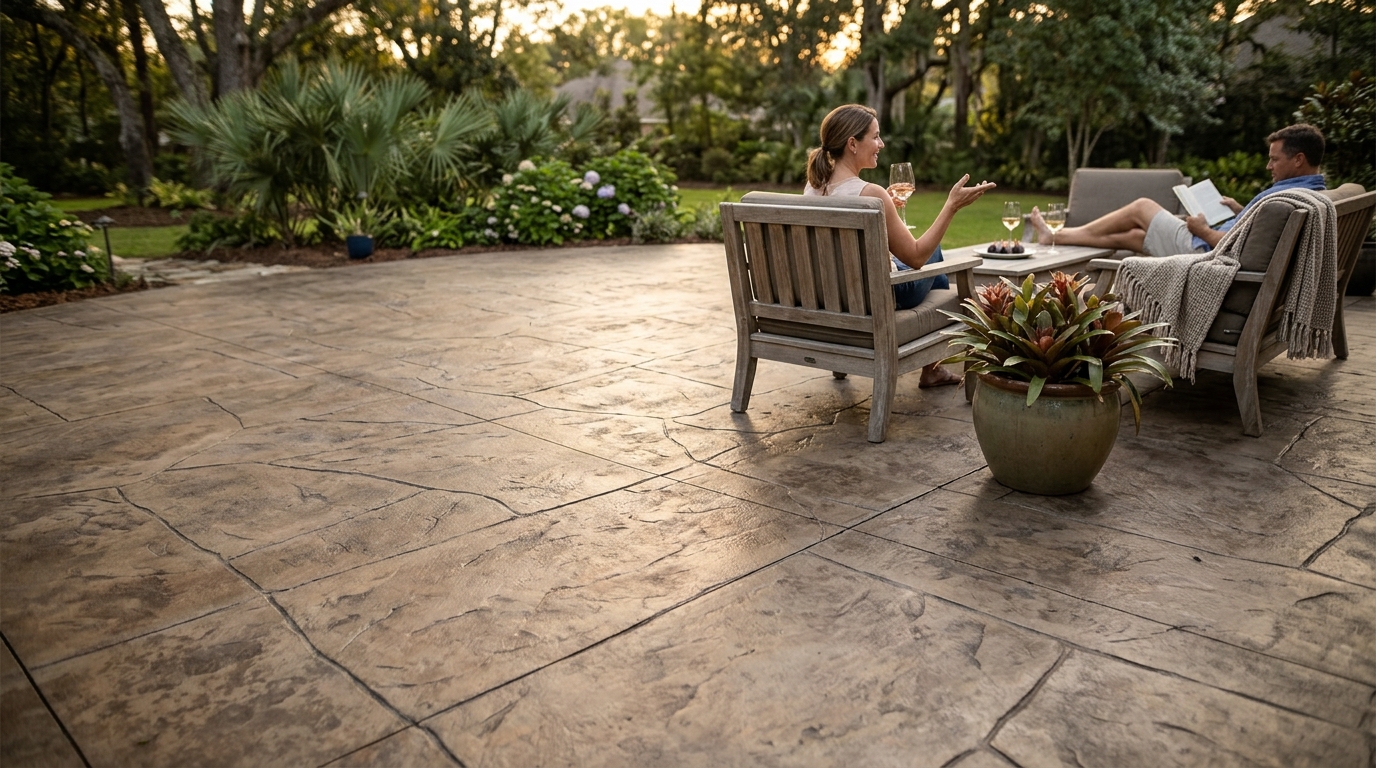
When selecting a design, consider the surrounding landscape. A patterned concrete patio can serve as a focal point in a garden or blend seamlessly with a deck. Acadiana Patios & Construction offers concrete coloring and finishing services as part of their broader portfolio. They work with homeowners to select patterns and colors that enhance curb appeal. The goal is to create a space that feels cohesive and intentional. A well-designed patio extends the living area of your home. It should reflect your personal style while remaining functional for daily use.
Structural Preparation and Drainage
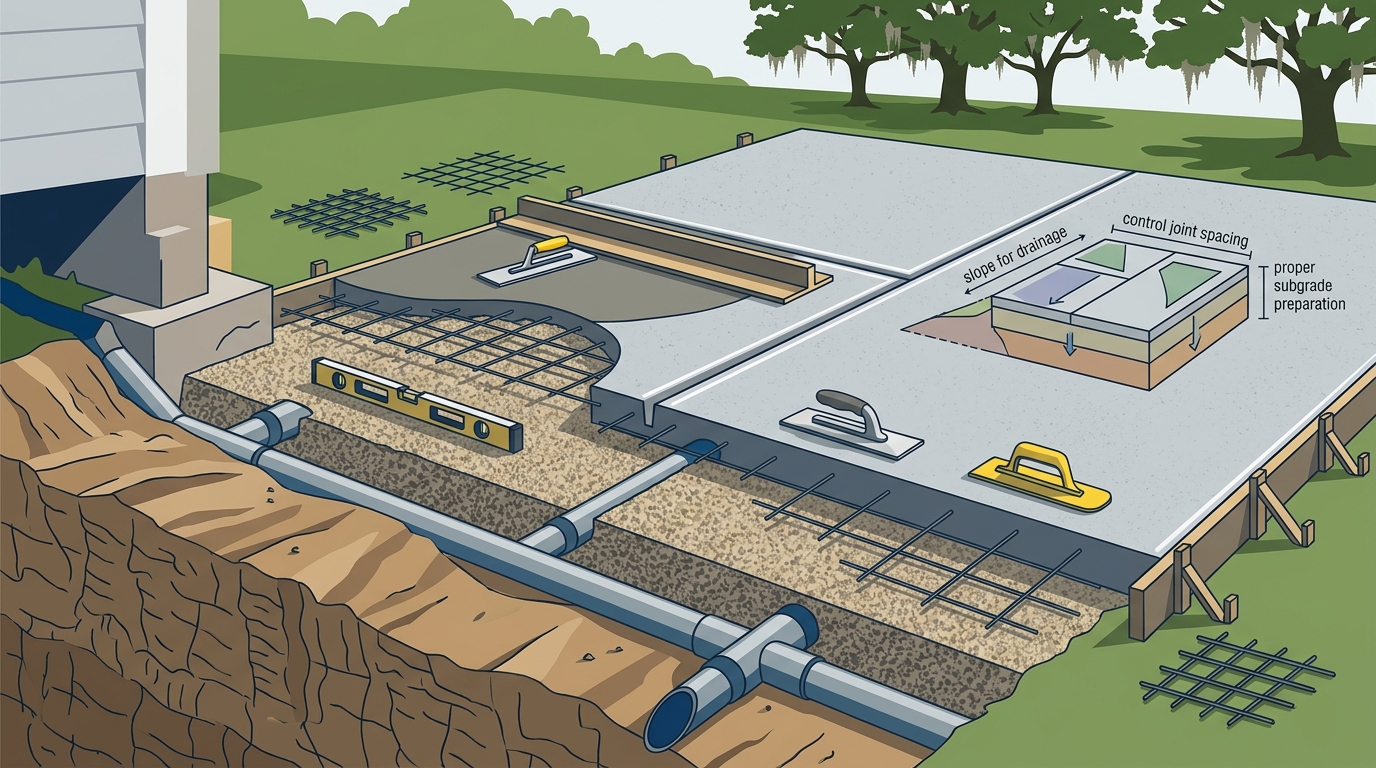
Proper drainage is the most critical technical aspect of concrete patio installation. Water that pools on a concrete surface can seep into joints and freeze in colder months, though Lafayette rarely sees freezing temperatures. More importantly, standing water can erode the subgrade over time. This erosion leads to voids beneath the slab, causing it to sink. The patio must be sloped away from the house. A standard slope is approximately one-eighth of an inch per foot. This ensures water flows away from your foundation and into a designated drainage area.
Control joints are another essential component. These are intentional cuts made into the concrete while it is still curing. Control joints are pre-planned weak points that guide where cracks will form. By creating these joints, contractors can ensure cracks occur in straight, predictable lines rather than random, jagged patterns. The spacing of these joints depends on the thickness of the slab and the expected temperature range. Acadiana Patios & Construction handles the entire process, from excavation to finishing. They ensure that the subgrade is compacted and that the slope is correct before any concrete is poured. This attention to detail prevents costly repairs down the line.
Long-Term Maintenance and Care
Concrete is a low-maintenance material, but it is not maintenance-free. Regular cleaning is necessary to prevent stains and surface degradation. Oil stains, for example, can penetrate the concrete if not treated promptly. Sealing the patio is a recommended practice. Concrete sealant is a protective coating that repels water and resists stains. Applying a sealant every two to three years can significantly extend the life of your patio. It also helps maintain the color and pattern of stamped concrete.
Inspections are also important. Check for any signs of cracking or shifting annually. Small cracks can be sealed to prevent water intrusion. If a section of the patio begins to sink, it may indicate a subgrade issue. Addressing these problems early is far less expensive than replacing the entire slab. Acadiana Patios & Construction stands behind their work with a workmanship warranty. They advise clients on proper care routines to ensure the longevity of their investment. Their team can also perform repairs or refinishing if needed in the future.
Key Takeaways
- Lafayette's expansive clay soils require specialized subgrade preparation to prevent slab movement.
- Proper drainage slope is essential to protect your home's foundation and the patio's structural integrity.
- Stamped concrete offers aesthetic flexibility while maintaining the durability of standard concrete.
- Control joints are necessary to manage cracking caused by temperature expansion and contraction.
- Regular sealing and inspection extend the lifespan of your concrete patio.
- Local expertise is valuable for navigating specific regional environmental challenges.
Frequently Asked Questions
How long does it take to install a concrete patio?
Can I install a concrete patio over an existing surface?
In some cases, yes. If the existing surface is stable and level, a new slab can be poured over it. However, this increases the height of the patio. You must ensure the new surface does not create a tripping hazard or block doors. Acadiana Patios & Construction can assess your specific site to determine the best approach.
What is the cost of a concrete patio in Lafayette?
Costs vary based on size, design complexity, and site conditions. Factors like excavation depth, drainage requirements, and finishing options all impact the final price. A basic smooth finish is less expensive than stamped or colored concrete. For an accurate estimate, a professional site visit is necessary.
Do I need a permit for a concrete patio in Lafayette?
Permit requirements depend on the size and location of the patio. In many jurisdictions, small patios do not require a permit. However, larger structures or those attached to the home may. Acadiana Patios & Construction is familiar with local regulations and can guide you through the permitting process if required.
How thick should a concrete patio be?
A standard residential patio is typically four inches thick. This thickness is sufficient for foot traffic and light furniture. If you plan to use the patio for heavy vehicles or large gatherings, a thicker slab may be recommended. The subgrade preparation is just as important as the slab thickness.
Can concrete patios handle Lafayette's humidity?
Yes, concrete is highly resistant to humidity. However, moisture can affect the curing process. Contractors must monitor weather conditions during installation. Rain during the curing phase can weaken the concrete. Acadiana Patios & Construction schedules projects with weather in mind to ensure optimal curing conditions. Learn more: Products 038 Services 8211.