
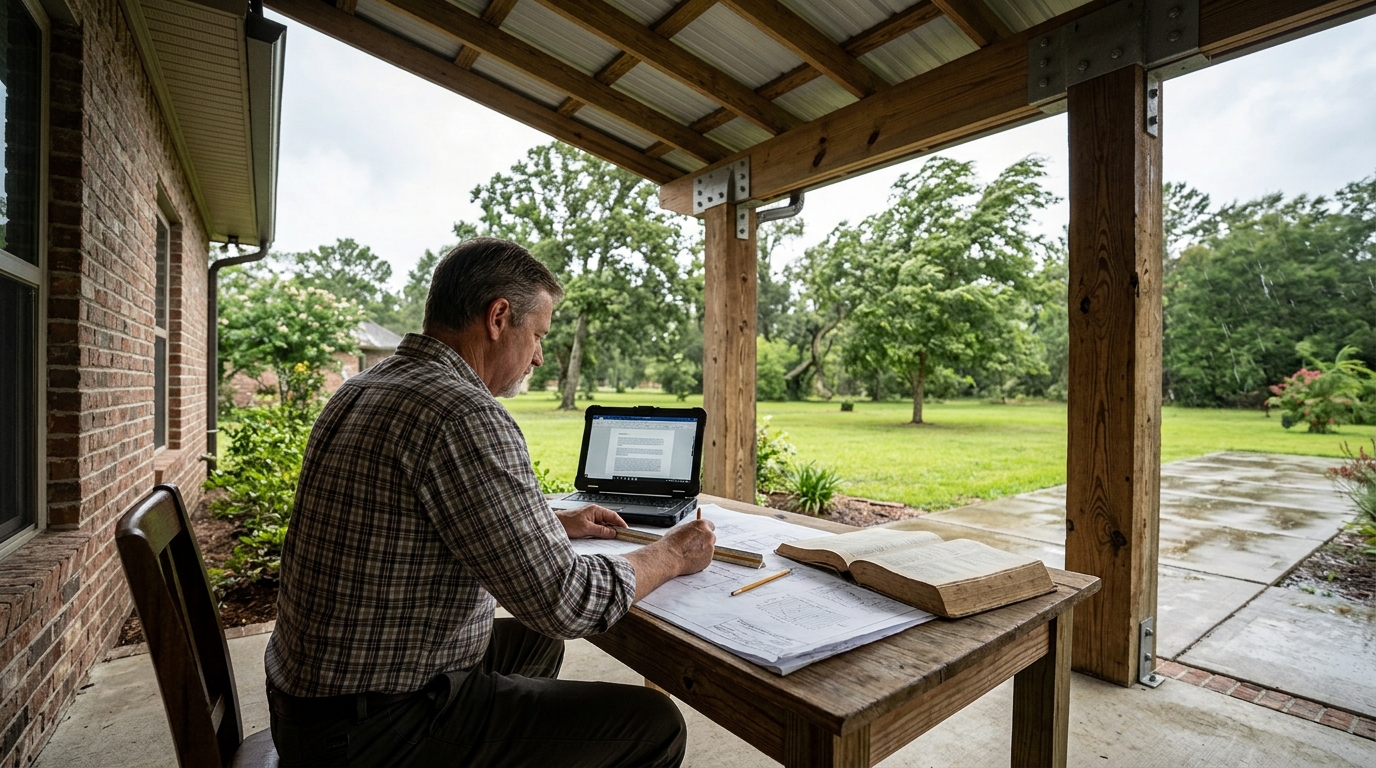
Calculating wind load for a Louisiana patio cover requires determining the basic wind speed, exposure category, and structural geometry to ensure the roof can withstand hurricane-force winds. This process typically takes 2 to 4 hours for a homeowner to complete using standard engineering references. Acadiana Patios & Construction uses these precise calculations to design structures that remain safe and stable in the Acadiana region.
Before you start
You need the following information before beginning your calculations:
- The exact address or coordinates of the property.
- The height of the patio cover from the ground.
- The dimensions of the roof (width and length).
- The type of roof material (aluminum, wood, or steel).
- The local building code version currently in effect in Lafayette, Louisiana.
Step 1: Identify the Basic Wind Speed
Locate the basic wind speed for your specific location using the ASCE 7 wind speed map. The basic wind speed is the 3-second gust wind speed in open terrain at a height of 33 feet above ground. For most of Lafayette and the Acadiana area, this value is typically 140 mph or higher due to the coastal proximity. A correct result is a specific number, such as 140 mph, which serves as the baseline for all subsequent calculations.
Step 2: Determine the Exposure Category
Classify the site based on the surrounding terrain and obstructions. Exposure Category B is for urban areas with dense buildings, while Category C is for open fields or coastal areas with few obstructions. In rural Acadiana, most properties fall into Exposure Category C. A correct result is a letter designation (B, C, or D) that adjusts the wind pressure based on how much friction the wind encounters before hitting your structure.
Step 3: Define the Structural Geometry
Measure the height of the roof and the aspect ratio of the structure. The aspect ratio is the ratio of the roof width to its length. This geometric data is critical because wind pressure varies significantly across different parts of the roof, with the highest pressures occurring at the corners and edges. A correct result is a documented set of dimensions and a calculated aspect ratio that matches the physical structure.
Step 4: Apply the Wind Load Formula
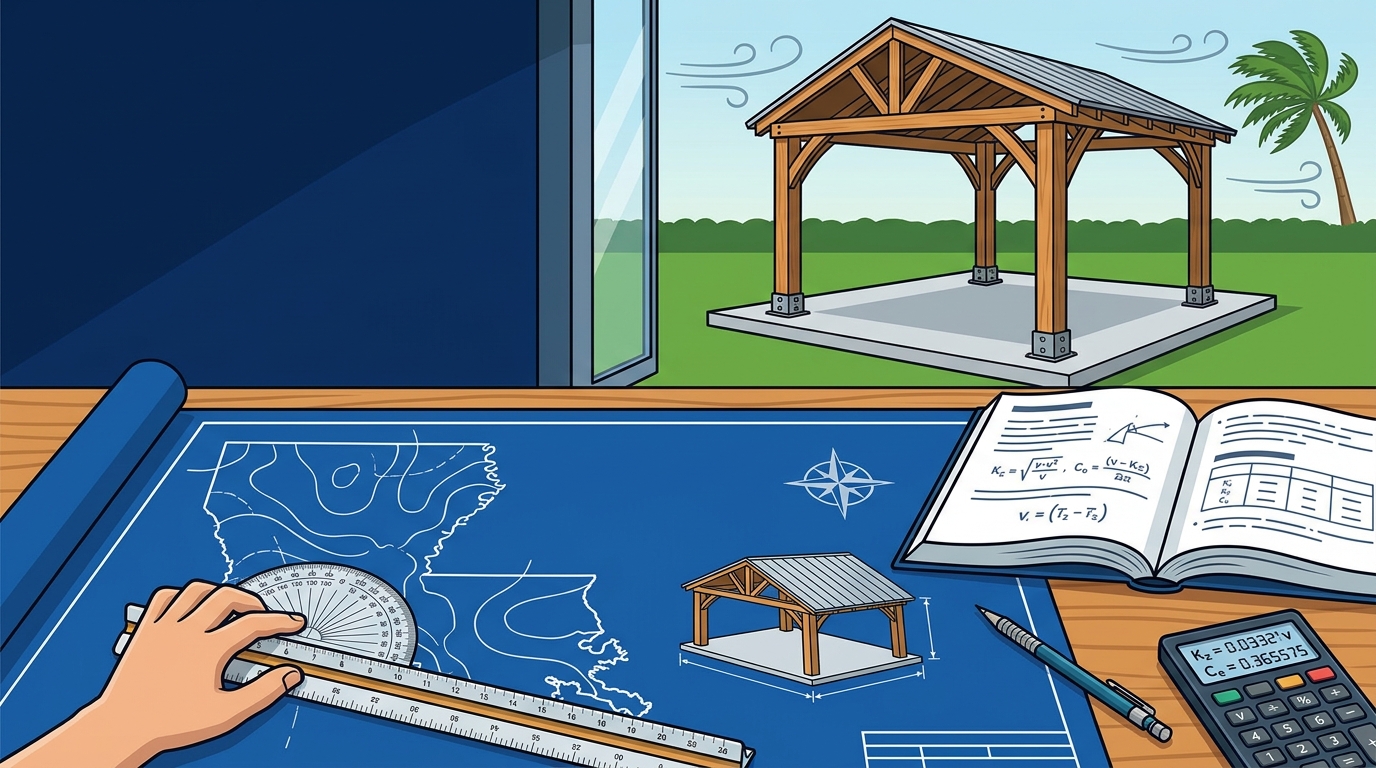
Use the standard wind load equation to calculate the design pressure. The formula is W = qh * Gc * Cp, where qh is the velocity pressure, Gc is the gust effect factor, and Cp is the pressure coefficient. The velocity pressure is calculated using the basic wind speed and exposure category. A correct result is a pressure value in pounds per square foot (psf) that indicates the force the roof must resist.
Step 5: Verify Material Strengths
Compare the calculated wind load against the rated capacity of your chosen materials. Aluminum panels, for example, have specific load ratings that must exceed the calculated wind pressure. Insulated patio covers often feature reinforced panels designed to handle higher loads. A correct result is a confirmation that the selected materials and fasteners can support the calculated load with a safety factor of at least 1.5.
When it goes wrong
Using outdated wind speed maps
Older maps may list lower wind speeds that do not reflect current engineering standards. Always use the most recent ASCE 7 map to ensure your calculations meet current safety requirements.
Ignoring the exposure category
Assuming a rural property is in a dense urban area can lead to underestimating wind pressure. Correctly identifying the exposure category is essential for accurate load calculations.
Overlooking roof geometry
Using an average pressure for the entire roof can miss critical high-pressure zones at the corners. Detailed analysis of the roof shape is necessary to identify these stress points.
Underestimating material degradation
Wood and other organic materials lose strength over time due to moisture and rot. Factor in a reduction in material strength to account for long-term performance in Louisiana's humid climate.
Frequently Asked Questions
What is the standard wind speed for Lafayette, Louisiana?
The basic wind speed for Lafayette and the surrounding Acadiana area is typically 140 mph, based on the ASCE 7 wind speed maps. This value accounts for the region's exposure to hurricane-force winds.
How does exposure category affect wind load?
Exposure category determines the friction the wind encounters before reaching the structure. Category C, common in rural areas, results in higher wind pressures than Category B, which is typical for dense urban environments.
Can I use a generic wind load calculator?
Generic calculators can provide a starting point, but they may not account for specific local building codes or unique structural geometries. For critical structures, it is best to use detailed engineering software or consult a professional.
What materials are best for high wind loads?
Aluminum and steel are generally the best materials for high wind loads due to their strength and resistance to moisture. Patio covers made from these materials are often rated for higher wind speeds than wood structures.
Do I need a permit for a patio cover in Louisiana?
Yes, most patio covers in Louisiana require a building permit. The permit process ensures that the structure meets local wind load requirements and building codes. Contact Acadiana Patios & Construction to help navigate the permit process for your project.
Conclusion
Calculating wind load for a Louisiana patio cover is a critical step in ensuring the safety and longevity of your outdoor space. By following these steps, you can determine the appropriate structural requirements for your project. Acadiana Patios & Construction offers expert design and installation services to help you build a patio cover that stands up to the toughest Louisiana weather. Learn more: Contact Acadiana Patios Construction.