Homeowners in Lafayette, Louisiana, and the greater Acadiana region face unique challenges when it comes to maintaining their outdoor living spaces. The humid subtropical climate brings intense heat, frequent thunderstorms, and a persistent population of insects that can ruin a relaxing afternoon by the water. According to the National Oceanic and Atmospheric Administration, Louisiana experiences some of the highest humidity levels in the United States, which directly impacts the usability of open-air pools. This environmental reality forces many residents to choose between two primary solutions: a full pool enclosure or a traditional screened enclosure. Both options extend your swimming season and protect your investment, but they do so in fundamentally different ways. Understanding the structural, financial, and lifestyle differences is critical before breaking ground. (About Us 8211 Acadiana)
Structural Differences and Materials
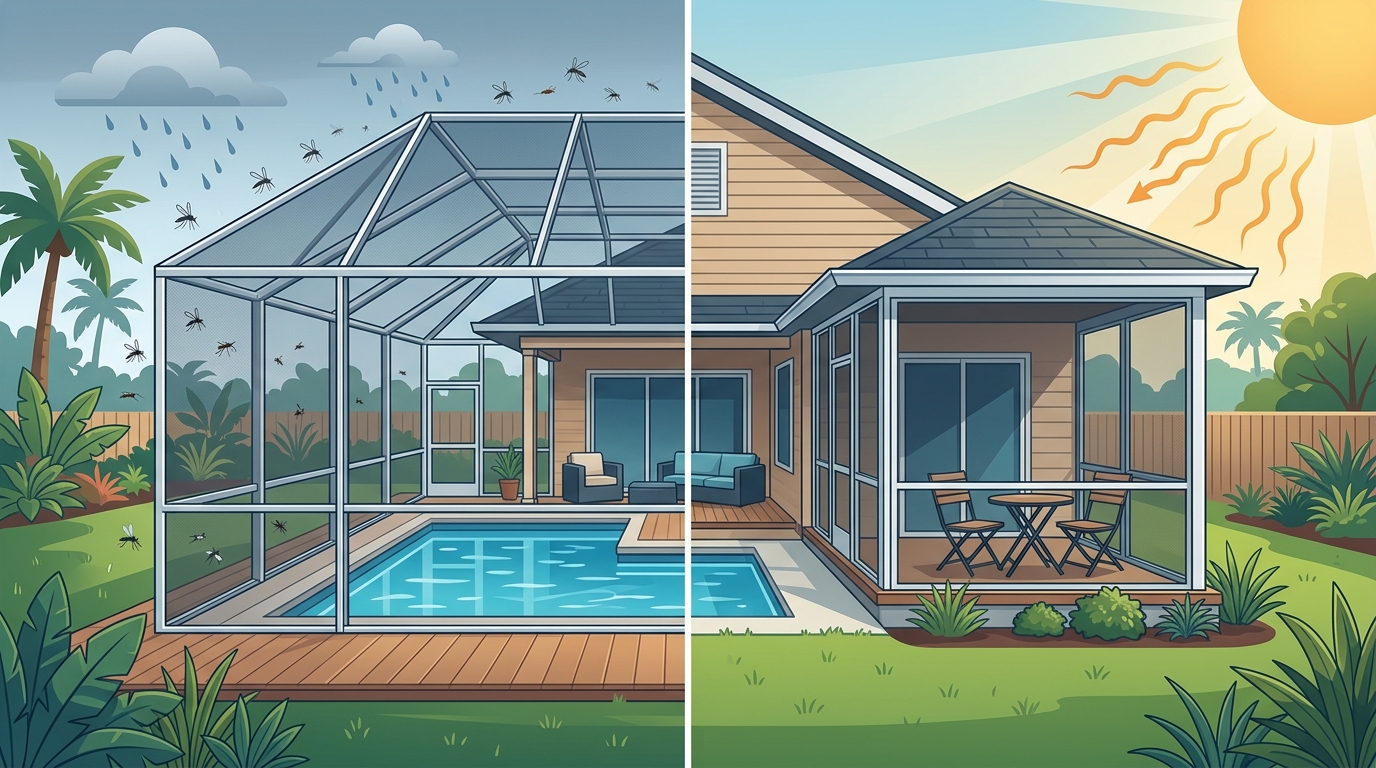
The most immediate distinction between these two structures lies in their physical composition and the materials used to build them. A screened enclosure is essentially a large cage built around your pool area. It utilizes an aluminum frame with fine mesh screening on all sides and often a screened roof. The primary goal is ventilation and insect exclusion. This design allows air to flow freely, which is crucial in the swampy terrain of Acadiana. However, it offers no protection against rain, wind, or falling debris like leaves and branches. (Acadiana Patios amp Construction)
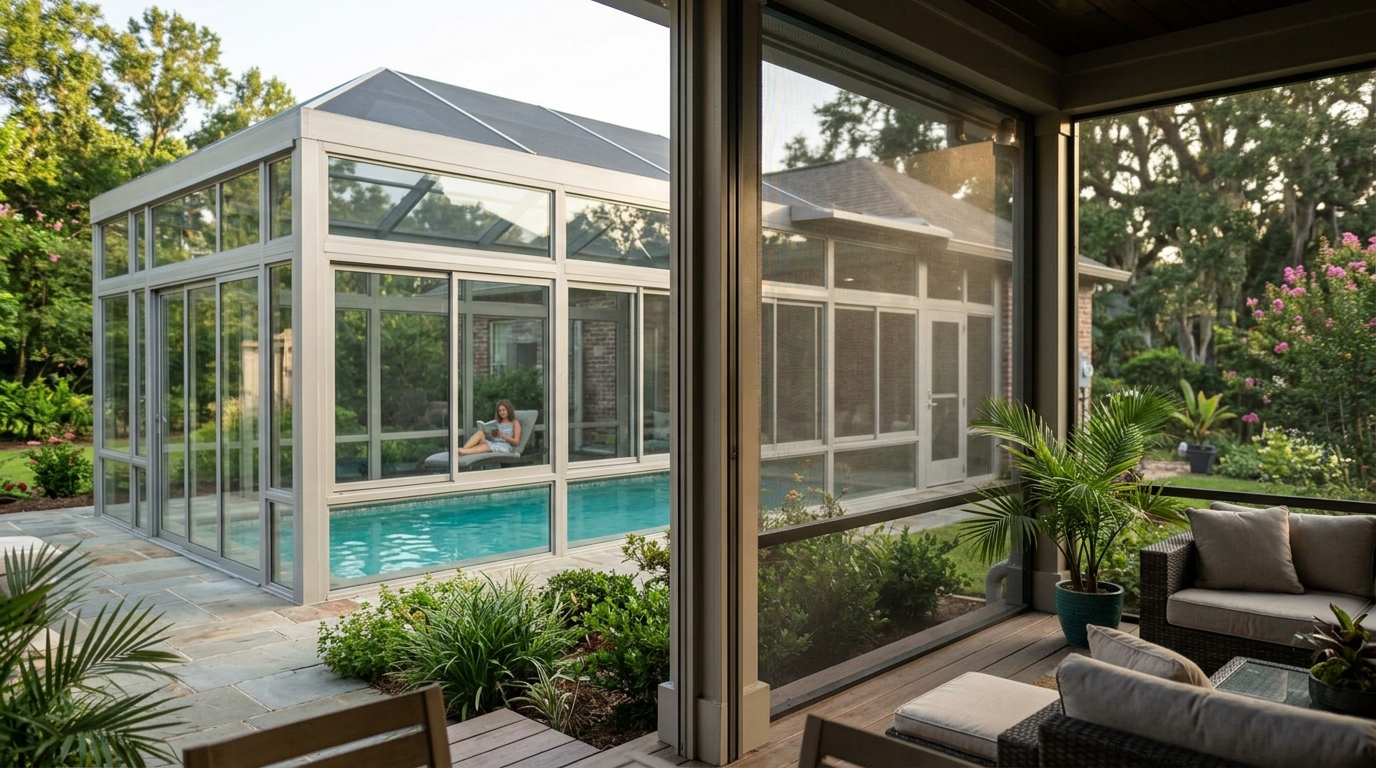
In contrast, a pool enclosure is a fully sealed structure. It typically features a roof and walls made of polycarbonate panels, glass, or insulated aluminum panels. This creates a climate-controlled environment that is completely isolated from the outside weather. The structural integrity of a pool enclosure must be higher to withstand wind loads and potential impact from storms, which are common in Louisiana. At Acadiana Patios & Construction, we specialize in both types, ensuring that the framing is robust enough to handle the specific weather patterns of Lafayette and surrounding parishes. (Acadiana Patios amp Construction)
When you choose a pool enclosure, you are essentially building a new room for your home. This requires precise engineering to ensure that the structure does not leak and that the thermal expansion of the materials is accounted for. Screened enclosures are simpler in design but require careful attention to the tension of the screens to prevent sagging over time. Both structures add significant value to your property, but the pool enclosure does so by adding usable square footage that functions as a year-round extension of your living space. (Blogs 8211 Acadiana Patios)
Climate Control and Temperature
One of the most compelling reasons to consider a pool enclosure is the ability to control the temperature of the water and the air. In Lafayette, Louisiana, the average high temperature in July often exceeds 90 degrees Fahrenheit. While this might sound appealing for swimming, the humidity can make the air feel much hotter and more oppressive. Conversely, winter months can bring cold fronts that drop temperatures below freezing, making an open pool unusable for months at a time.
A pool enclosure acts as a greenhouse. During the day, solar radiation passes through the transparent or translucent panels and heats the water and the air inside. This natural heating effect can extend your swimming season by several months, often allowing you to swim comfortably from early spring through late fall. According to data from the U.S. Energy Information Administration, passive solar heating can significantly reduce the energy costs associated with maintaining pool water temperature. This means lower utility bills and a more consistent swimming experience.
Screened enclosures do not offer this thermal benefit. They keep the bugs out, but they do not trap heat. If you swim in a screened enclosure during a cold morning, the water will still be cold, and the breeze will make it feel even colder. However, for homeowners who prefer a natural breeze and do not mind the temperature fluctuations, the screened option provides a more "outdoor" feel. It is important to note that some pool enclosures can be equipped with motorized vents or fans to provide ventilation when the interior becomes too warm, offering the best of both worlds.
Maintenance and Longevity
Maintenance requirements vary significantly between the two options. A screened enclosure requires regular inspection of the mesh screens. In areas with heavy wind or storms, screens can tear or become detached from the frame. Repairing or replacing screens is a relatively inexpensive and straightforward process, but it is a recurring task. Additionally, the aluminum frame may require occasional cleaning to remove dirt and pollen, especially during the high pollen seasons in Louisiana.
Pool enclosures generally require less frequent maintenance regarding the structural components. The polycarbonate or glass panels need to be cleaned periodically to maintain transparency, but they do not tear or sag. The aluminum framing is typically powder-coated for durability and resistance to corrosion, which is vital in the humid coastal environment. However, the seals and gaskets that keep the structure watertight may need to be inspected and replaced every few years to prevent leaks. At Acadiana Patios & Construction, we use high-quality materials that come with warranties, often up to 10 years, to ensure long-term performance.
Another maintenance factor is debris. With a screened enclosure, leaves, pine needles, and other debris can accumulate on the roof and in the corners of the structure. This debris can trap moisture and lead to mold or mildew growth if not regularly removed. A pool enclosure, being fully sealed, prevents most debris from entering the pool area, keeping the water cleaner and reducing the workload for pool cleaners. This is a significant advantage for homeowners who want to minimize the time spent on pool care.
Cost Analysis and Value
Cost is often the deciding factor for homeowners. Generally, a screened enclosure is less expensive than a full pool enclosure. The materials are simpler, and the construction process is less complex. However, the cost difference can vary depending on the size of the pool, the height of the structure, and the specific materials chosen. For example, a screened enclosure with a high roof and custom features like a pergola top will cost more than a basic pool enclosure.
When evaluating the cost, it is essential to consider the long-term value. A pool enclosure can increase the resale value of your home more significantly than a screened enclosure because it adds usable living space. It is viewed as a premium feature that appeals to buyers looking for low-maintenance outdoor living options. Additionally, the energy savings from reduced pool heating and the protection of the pool equipment from the elements can offset the initial investment over time.
Acadiana Patios & Construction offers competitive pricing for both services. We understand that every homeowner has a different budget and set of needs. That is why we provide free estimates to help you understand the specific costs associated with your project. We also offer financing options to make these improvements more accessible. By choosing a reputable contractor with over 30 years of experience, you ensure that the installation is done correctly, which protects your investment and prevents costly repairs down the line.
Comparison Summary
| Feature | Pool Enclosure | Screened Enclosure |
|---|---|---|
| Weather Protection | Full protection from rain, wind, and debris. | Protection from insects only. |
| Temperature Control | Traps heat, extending swimming season. | No thermal benefit; relies on natural breeze. |
| Maintenance | Low; periodic cleaning of panels and seals. | Moderate; frequent screen repairs and debris removal. |
| Cost | Higher initial investment. | More affordable upfront cost. |
| Resale Value | Significant increase due to added living space. | Moderate increase; viewed as a utility structure. |
| Ventilation | Requires vents or fans for airflow. | Natural airflow throughout the structure. |
Key Takeaways
- Acadiana Patios & Construction has been serving Lafayette and Acadiana since 1985, providing over 30 years of expertise in home improvement.
- Pool Enclosures provide a climate-controlled environment that extends the swimming season and protects the pool from weather and debris.
- Screened Enclosures offer a more affordable option that focuses on insect protection and natural ventilation.
- Maintenance for pool enclosures is generally lower, with fewer repairs needed compared to the frequent screen replacements required for screened enclosures.
- Value addition is higher for pool enclosures as they are considered a premium living space rather than just a utility structure.
- Material Quality is critical; Acadiana Patios uses high-grade aluminum and polycarbonate materials that come with warranties up to 10 years.
- Professional Installation is essential to ensure structural integrity and compliance with local building codes in Louisiana.
Frequently Asked Questions
Can I swim in my pool enclosure during the winter in Louisiana?
Yes, one of the primary benefits of a pool enclosure is the ability to extend your swimming season. The greenhouse effect traps heat, allowing you to swim comfortably even during cooler months in Lafayette and Acadiana.
Do screened enclosures keep out all insects?
Screened enclosures are designed to keep out large insects like mosquitoes and flies. However, very small insects like gnats may still find their way through the mesh if the screens are not tightly sealed.
How long does it take to install a pool enclosure?
The installation time varies depending on the size and complexity of the structure. Typically, a pool enclosure can be completed in a few weeks, while a screened enclosure may take less time. Acadiana Patios & Construction provides a detailed timeline during your free estimate.
Are pool enclosures noisy during rain?
Modern pool enclosures use high-quality polycarbonate or insulated panels that significantly reduce the noise of rain. While you may hear some sound, it is generally much quieter than rain hitting a metal roof or the ground.
Do I need a permit for a pool enclosure in Lafayette?
Yes, most structural additions to a home require a building permit. Acadiana Patios & Construction handles the permitting process for you, ensuring that your project complies with all local regulations in Louisiana.
Can I add features like lighting or fans to my enclosure?
Absolutely. Both pool enclosures and screened enclosures can be customized with lighting, ceiling fans, heaters, and other amenities to enhance your comfort and usability.
What is the warranty on Acadiana Patios products?
We offer warranties on our materials and workmanship. Specific warranty terms depend on the product line, but we stand behind the quality of our work with guarantees up to 10 years on certain components.
Get Your Free Estimate
Choosing between a pool enclosure and a screened enclosure is a significant decision that affects your home's value, your lifestyle, and your budget. At Acadiana Patios & Construction, we are dedicated to helping you make the right choice for your specific needs. With over 30 years of experience in Lafayette and Acadiana, we have the expertise to deliver a high-quality installation that meets your expectations.
Do not wait to start enjoying your pool year-round. Contact us today to schedule your free estimate. Our team is ready to answer your questions and provide a detailed proposal for your project. Visit our Products & Services page to learn more about our full range of home improvement solutions. We look forward to working with you to create the perfect outdoor living space.