How to Protect Outdoor Structures from Hurricane-Season Damage in Acadiana
Living in Lafayette, Louisiana, means accepting the reality of hurricane season. The National Hurricane Center reports that the Gulf Coast faces an average of 18 tropical storms and hurricanes annually, with wind speeds often exceeding 100 miles per hour. For homeowners, this is not just a weather event; it is a structural stress test. Your outdoor living spaces, which serve as extensions of your home, are particularly vulnerable to high winds, flying debris, and torrential rain. Protecting these assets requires more than just hope; it demands engineering-grade preparation and professional installation standards.
Understanding Wind Load and Structural Integrity
Before selecting materials, you must understand the forces at play. Wind load is the force exerted by wind on a structure. In Louisiana, building codes are stringent because the region falls within high-wind zones. A standard patio cover that works in mild climates may fail catastrophically during a Category 3 storm if it is not engineered for local wind speeds.
Acadiana Patios & Construction has served the Lafayette area since 1985, witnessing decades of storm impacts. We know that failure often occurs not because the material breaks, but because the connection points fail. The wind gets underneath a structure, creating lift. If your patio cover, carport, or garage is not anchored to a concrete slab with proper hold-downs, it can be ripped from its foundation. This is why working with a licensed contractor who understands Louisiana building codes is non-negotiable.
When evaluating your current structures, look for signs of flexing or creaking during high winds. These are early warnings of structural fatigue. Professional engineers calculate the specific wind load requirements for your zip code, ensuring that your outdoor structures can withstand the pressure differentials created by hurricane-force winds.
Choosing Hurricane-Resistant Materials
The choice of material dictates how your structure performs under stress. In the Acadiana region, three primary materials dominate the market for outdoor structures: aluminum, cypress wood, and vinyl.
Aluminum: The Engineering Standard
Aluminum is widely regarded as the superior material for hurricane-prone areas. It is non-corrosive, meaning it does not rust when exposed to the heavy rains and humidity typical of Louisiana summers. More importantly, aluminum structures can be engineered with thicker gauges and reinforced trusses to meet high wind-load ratings. Insulated patio covers made from aluminum offer additional benefits, including noise reduction during rain and better temperature regulation, which is crucial for year-round comfort.
Aluminum also requires minimal maintenance. Unlike wood, it does not warp, crack, or splinter. This durability ensures that your structure remains intact and functional long after the storm has passed. For homeowners seeking a long-term investment, aluminum provides the best balance of strength and longevity.
Cypress Wood: Aesthetic Durability
Cypress is a traditional favorite in Louisiana due to its natural resistance to rot and insects. The heartwood of the cypress tree contains oils that repel water and deter pests. However, wood is susceptible to warping under extreme heat and moisture changes. While beautiful, cypress structures require rigorous sealing and maintenance to maintain their structural integrity during hurricane season.
If you choose cypress, ensure it is treated and sealed annually. Cypress patio covers and pavilions can withstand storms, but their lifespan is heavily dependent on the quality of the upkeep. For those who prioritize aesthetics over low maintenance, cypress remains a viable option, provided it is installed by experts who understand how to brace it against high winds.
Vinyl and Composite Options
Vinyl structures are popular for their affordability and ease of installation. They are resistant to rot and insects, similar to aluminum. However, vinyl can become brittle in extreme cold or flexible in extreme heat, potentially affecting its structural rigidity. Composite materials, which blend wood fibers with plastic, offer a middle ground but can be heavier, requiring more robust foundational support.
Critical Anchoring and Foundation Systems
The strongest material in the world is useless if it is not anchored correctly. The foundation is the most critical component of any outdoor structure. In Acadiana, we primarily use concrete slabs as the base for patios, carports, and garages.
Concrete Slab Integrity
A concrete slab must be poured to specific thickness and reinforcement standards. Rebar or wire mesh must be embedded within the concrete to prevent cracking under the weight of the structure and the dynamic load of wind. If your existing slab is cracked or uneven, it must be repaired or replaced before installing a new structure.
For new constructions, we recommend a slab thickness of at least 4 to 6 inches, depending on the size of the structure. The slab must extend beyond the footprint of the structure to provide a stable base for the footings. Proper drainage around the slab is also essential to prevent water accumulation, which can undermine the foundation over time.
Hold-Downs and Tie-Downs
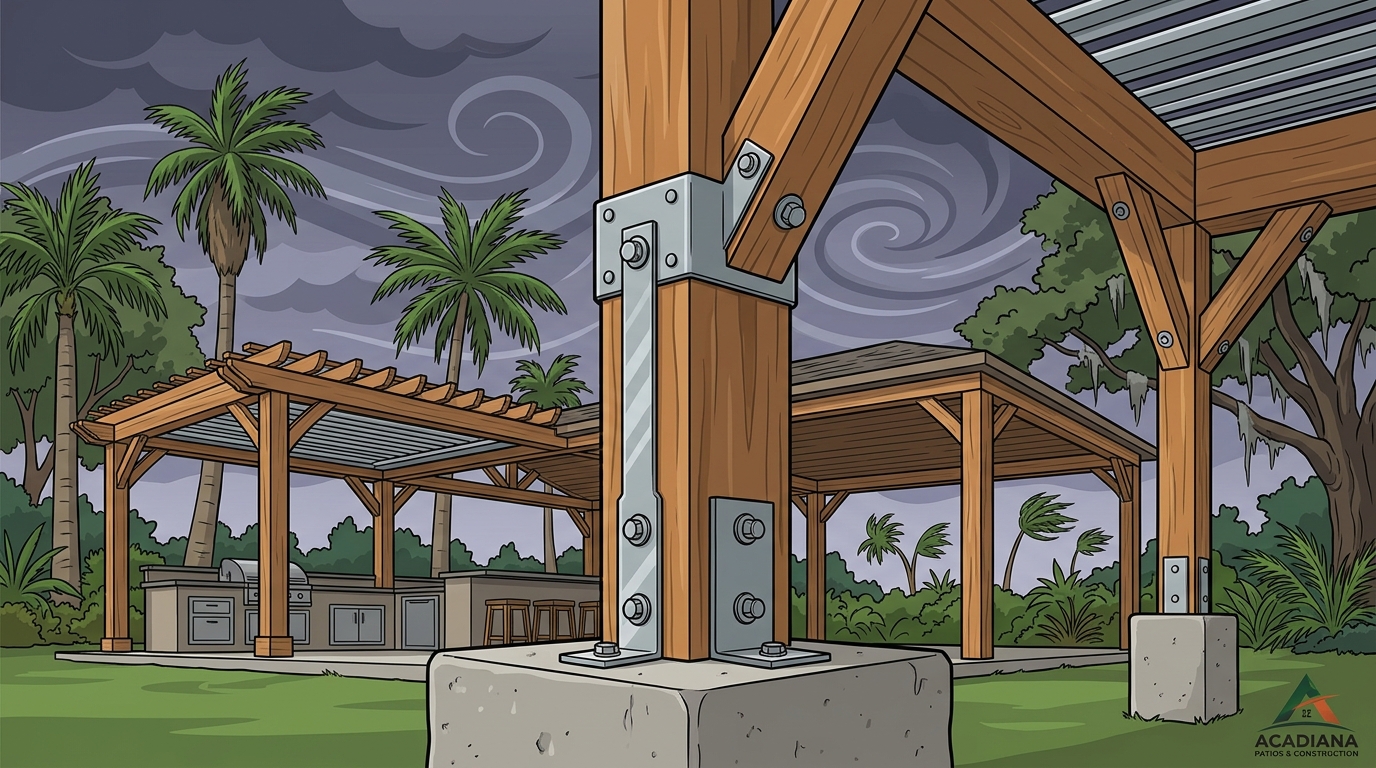
Hold-downs are metal connectors that anchor the vertical posts of your structure to the concrete foundation. They are designed to resist uplift forces caused by wind. In hurricane zones, standard screws or bolts are insufficient. You need heavy-duty hold-downs that are rated for the specific wind load of your area.
Additionally, lateral bracing is necessary to prevent the structure from swaying side-to-side. This bracing connects the posts to the roof trusses, creating a rigid triangle that distributes wind forces evenly. When you contact us for an estimate, we evaluate your site to determine the exact anchoring requirements based on local code and wind speed data.
Screened and Pool Enclosures: The First Line of Defense
Screened enclosures and pool cages serve a dual purpose. They keep out debris and insects during calm weather, and they act as a buffer during storms. However, they must be designed to allow wind to pass through rather than catching it like a sail.
Screen Material and Frame Strength
The screen material itself must be high-tensile to resist tearing from flying debris. Standard fiberglass screens can rip easily. We recommend heavy-duty aluminum screening or impact-resistant mesh for pool enclosures. The frame of the enclosure must be as robust as the main structure. If the frame is weak, the screen will pull out, leading to catastrophic failure.
For swimming pool enclosures, the design must account for the weight of the structure and the wind load on the large surface area. Motorized shades and screens can be integrated to provide additional protection. These motorized systems allow you to deploy extra layers of defense before a storm hits, adding an extra margin of safety.
Debris Management
Even the best enclosure can be damaged by large debris, such as tree branches or roofing materials. While you cannot control the environment, you can mitigate risk by trimming trees near your structures. Motorized shades can also be lowered to protect the screen mesh from direct impact. This proactive measure can save thousands in repair costs after a storm.
Pre-Season Maintenance Checklist
Protection begins long before the first storm warning. Regular maintenance ensures that your structures remain in peak condition. Here is a checklist for homeowners in Acadiana:
- Inspect Anchors: Check all bolts, screws, and hold-downs for rust or looseness. Tighten any that are loose.
- Check for Corrosion: Look for signs of rust on metal components. Treat any rust spots immediately with a rust inhibitor and paint.
- Examine Screens: Repair any tears or holes in screen mesh. A small tear can expand rapidly in high winds.
- Clear Debris: Remove leaves, branches, and dirt from gutters and roof surfaces. Clogged gutters can lead to water damage and added weight.
- Trim Vegetation: Cut back any trees or shrubs that are within 10 feet of your structures. This reduces the risk of branches striking your home.
- Test Motorized Systems: Ensure that motorized shades and screens operate smoothly. Lubricate moving parts if necessary.
By following this checklist, you can identify and address potential issues before they become major problems. If you are unsure about any aspect of your structure's condition, consult with a professional for an inspection.
Key Takeaways
- Wind Load is Critical: Structures must be engineered for local wind speeds, not just standard building codes.
- Aluminum is Durable: Aluminum offers superior resistance to rot, rust, and warping compared to wood or vinyl.
- Foundation Matters: A reinforced concrete slab with proper hold-downs is the only safe base for outdoor structures.
- Screen Integrity: High-tensile screens and robust frames are essential for pool and screened enclosures.
- Regular Maintenance: Annual inspections and repairs prevent minor issues from becoming major failures.
- Professional Installation: Only licensed contractors with local experience can ensure code compliance and structural safety.
- Proactive Protection: Trimming trees and securing debris reduces the risk of impact damage.
Frequently Asked Questions
What is the best material for a patio cover in a hurricane zone?
Aluminum is generally considered the best material for hurricane zones due to its high strength-to-weight ratio, resistance to corrosion, and ability to be engineered for high wind loads. It does not warp or rot, making it ideal for the humid Louisiana climate.
Do I need a permit to install a patio cover in Lafayette?
Yes, most structural additions, including patio covers, carports, and garages, require a building permit in Lafayette and Acadiana. Permits ensure that the structure meets local building codes for wind resistance and safety. Acadiana Patios & Construction handles the permitting process for all our clients.
How can I protect my pool enclosure from storm damage?
To protect your pool enclosure, use high-tensile screen mesh and ensure the frame is securely anchored to a concrete foundation. Consider installing motorized shades that can be deployed before a storm to add an extra layer of protection against debris.
What should I do if my outdoor structure is damaged by a hurricane?
If your structure is damaged, do not attempt to repair it yourself. Contact a licensed contractor to assess the damage. Structural integrity may be compromised, and improper repairs can lead to further failure. We offer repair and renovation services for storm-damaged structures.
How long does an aluminum patio cover last?
A properly installed aluminum patio cover can last 20 to 30 years or more with minimal maintenance. Its resistance to rust and rot makes it a long-term investment that retains its value and functionality over time.
Can I install a carport on an existing concrete driveway?
Yes, but the existing concrete must be in good condition and thick enough to support the structure. We often recommend pouring a new, reinforced slab to ensure proper anchoring and longevity. Carports and garages require robust foundations to withstand wind uplift.
Why is professional installation important for hurricane protection?
Professional installation ensures that all components are correctly sized, anchored, and sealed. DIY installations often fail to meet code requirements or use inadequate materials, leading to structural failure during storms. Licensed contractors have the expertise to engineer structures for local conditions.
Secure Your Home Today
Don't wait for the next storm to assess the safety of your outdoor structures. With over 30 years of experience serving Lafayette and Acadiana, Acadiana Patios & Construction is your trusted partner for hurricane-resistant home improvements. We combine premium materials, engineering expertise, and local knowledge to build structures that stand the test of time.
Contact us today for a free estimate and let us help you protect your home and family. Call (337) 654-4337 or visit our about us page to learn more about our commitment to quality and safety.