Living in Acadiana means accepting the reality of hurricane season. The Gulf Coast region faces significant weather threats annually, with wind speeds often exceeding 100 miles per hour during major storms. According to the National Oceanic and Atmospheric Administration (NOAA), the United States has experienced a dramatic increase in billion-dollar weather disasters, with coastal Louisiana frequently bearing the brunt of these events. Protecting your home investment requires more than just boarding up windows; it demands a strategic approach to your exterior living spaces. This guide details how to fortify patios, sunrooms, and carports against high winds and debris. (Hurricane Safety Tips)
Understanding Wind Forces on Outdoor Structures
Before reinforcing your property, you must understand the physics of wind damage. Outdoor structures are not static objects; they interact dynamically with air currents. A lift force occurs when wind flows over the top of a roof, creating negative pressure that can literally suck a roof off its supports. This is particularly dangerous for flat or low-slope patio covers common in Louisiana.
Additionally, drag force pushes against the structure. If your patio cover has solid panels, it acts like a sail. The wind pressure increases exponentially with speed. For example, doubling the wind speed quadruples the pressure exerted on the structure. This is why standard residential construction often fails during Category 3 or higher storms. The key to survival is reducing the surface area exposed to the wind and ensuring the connection points between the roof and the frame are robust.
Acadiana Patios & Construction has served the Lafayette, Louisiana, and Acadiana areas since 1985. Our decades of experience have shown that structures designed with wind uplift in mind survive storms that destroy weaker builds. We prioritize engineering that accounts for these specific regional weather patterns.
Structural Reinforcement Strategies
The integrity of your outdoor structure begins with its foundation and frame. Weak connections are the primary point of failure during hurricanes. Here are the critical reinforcement strategies used by professional contractors.
Anchor Points and Footings
Your structure must be anchored directly to a concrete slab or properly poured footings. Screw-in anchors or simple surface bolts are insufficient for high-wind zones. The anchor must penetrate deep into the concrete to resist pull-out forces. When working with concrete slabs and coloring, ensure the slab thickness meets local code requirements for structural support. A thin slab will crack under the torque of a twisting frame.
Frame Connectivity
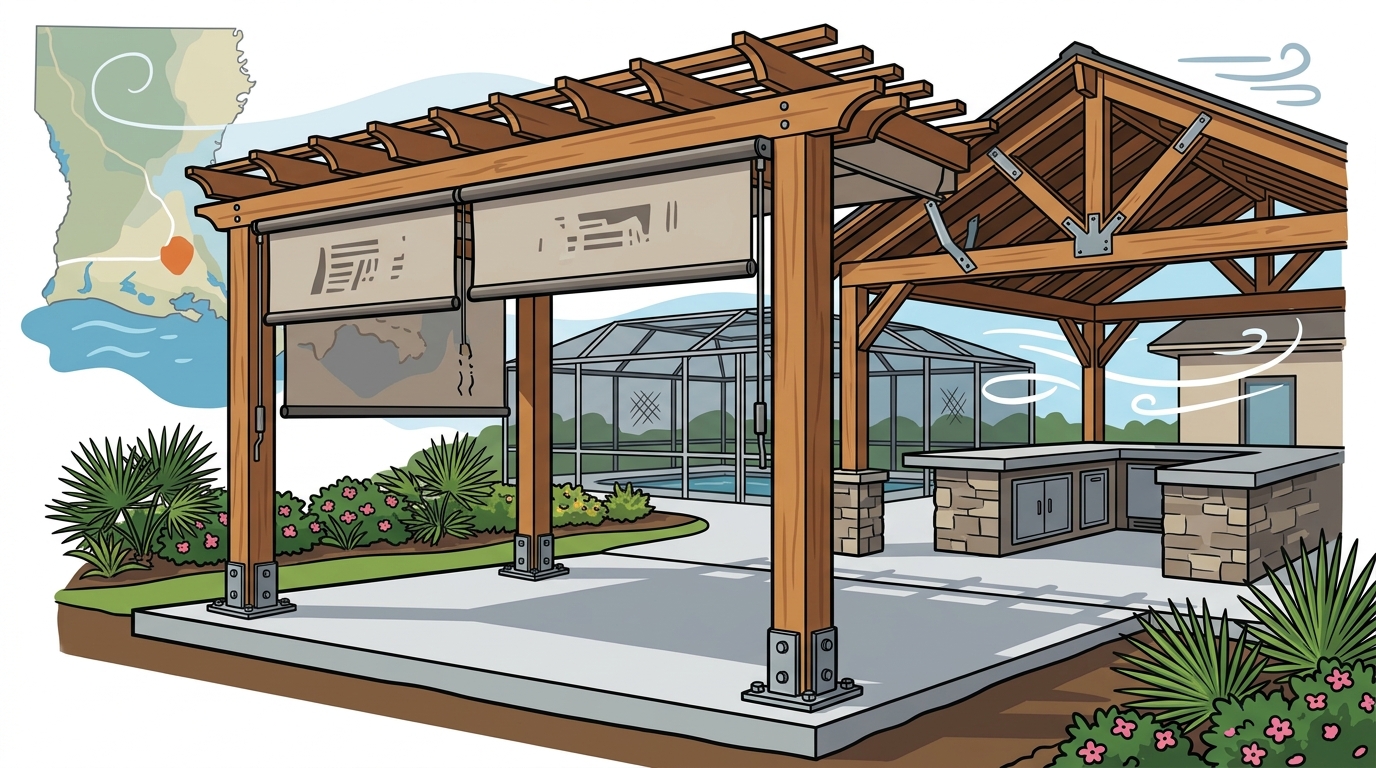
The connection between the vertical posts and the horizontal beams is crucial. Use heavy-duty metal brackets and hurricane ties. These metal connectors distribute the load across a wider area of the wood or metal frame. Standard nails or screws alone cannot withstand the shear forces generated by 100 mph winds. Our team at Acadiana Patios & Construction ensures that every joint is secured with industrial-grade fasteners designed for high-stress environments.
Roof Truss Configuration
For larger structures like carports and garages, the roof truss configuration matters. A continuous ridge beam provides better stability than individual rafters. This creates a unified structural unit that resists twisting. If you have an existing structure, a structural engineer can assess if additional bracing is needed to meet current wind load standards.
Material Selection for Storm Resistance
The material you choose for your outdoor structure dictates its resilience. In the humid, salty air of Louisiana, corrosion and rot are constant threats that weaken structures over time, making them more vulnerable during storms.
Aluminum vs. Wood
Aluminum is the superior choice for hurricane-prone regions. It is lightweight, which reduces the overall load on the structure, yet incredibly strong. More importantly, aluminum does not rot, warp, or attract termites. Motorized shades and screens often utilize aluminum frames for their durability and smooth operation. Wood, while aesthetically pleasing, requires rigorous maintenance. If the wood rots or the finish fails, the structural integrity is compromised. We partner with Elite, Aluminum, Inc. to provide high-quality aluminum products that stand the test of time.
Cypress Wood Options
If you prefer the natural look of wood, cypress patio covers are a viable option. Cypress contains natural oils that resist decay and insects. However, it is heavier than aluminum, requiring a stronger support structure. Cypress must be properly sealed and treated to withstand the humidity. For maximum storm resistance, we often recommend aluminum frames with cypress-look finishes to get the best of both worlds.
Polycarbonate and Glass
For sunrooms and pool enclosures, the roofing material is critical. Polycarbonate panels are impact-resistant and can withstand hail and flying debris better than standard glass. They are also lighter, reducing wind load. Tempered glass offers a sleek look but is heavier and more prone to shattering if impacted. Always choose laminated or tempered glass for safety and strength.
Enclosure and Screen Protection
One of the most common sources of damage is not the structure itself, but the screens and enclosures attached to it. When wind hits a screen, it creates a balloon effect, putting immense stress on the frame.
Retractable Screens
Installing motorized shades and screens is one of the best ways to protect your structure. Before a storm hits, you can retract the screens completely. This eliminates the sail effect and allows wind to pass through the structure with minimal resistance. Leaving screens up during a hurricane is a recipe for frame failure.
Impact-Resistant Screens
If you prefer permanent screens, use impact-resistant mesh. Standard fiberglass screens tear easily. Heavy-duty aluminum or stainless steel mesh can withstand debris impact better. However, even the strongest screen will fail if the frame is not reinforced. Always ensure your screen frame is bolted securely to the main structure.
Pool Enclosure Considerations
Swimming pool enclosures are particularly vulnerable. The large surface area acts as a massive sail. We recommend designs that allow for partial opening or use of retractable roofs. This allows you to vent the structure during high winds, reducing the pressure differential. Our insulated patio covers also offer design flexibility for wind management.
Pre-Season Maintenance Checklist
Protection begins long before the storm arrives. Regular maintenance ensures your structure remains strong. Here is a checklist for homeowners in Lafayette and Acadiana.
| Component | Inspection Point | Action Required |
|---|---|---|
| Fasteners | Loose bolts or screws | Tighten or replace with stainless steel |
| Roof Panels | Cracks or gaps | Seal or replace damaged panels |
| Screens | Tears or holes | Repair or remove before storm season |
| Drainage | Clogged gutters | Clean to prevent water weight buildup |
| Frame | Corrosion or rot | Prime, paint, or treat affected areas |
Regular inspections by a professional can identify hidden weaknesses. Contact us for a pre-season assessment. We check every joint, anchor, and panel to ensure your structure is ready for hurricane season.
Key Takeaways
- Wind Load Engineering: Structures must be designed to resist uplift and drag forces specific to the Gulf Coast region.
- Material Choice: Aluminum offers superior strength-to-weight ratio and corrosion resistance compared to wood in humid climates.
- Screen Management: Retractable screens eliminate the sail effect, significantly reducing frame stress during storms.
- Anchor Integrity: Heavy-duty anchors and hurricane ties are non-negotiable for securing structures to concrete slabs.
- Professional Installation: Licensed contractors like Acadiana Patios & Construction ensure compliance with local building codes and wind standards.
- Regular Maintenance: Annual inspections prevent small issues from becoming catastrophic failures during high winds.
- Insurance Coverage: Verify that your homeowner's insurance covers wind damage to outdoor structures and additions.
Frequently Asked Questions
Can a patio cover withstand a Category 4 hurricane?
Yes, if it is engineered and installed correctly. Structures built with aluminum frames, heavy-duty anchors, and proper roof truss configurations can withstand Category 4 winds. However, debris impact is a separate concern. Using impact-resistant roofing materials is essential for survival.
Should I leave my screens up during a hurricane?
No. Leaving screens up creates a sail effect that can rip the frame off its anchors. Always retract screens or remove them before a storm hits. If you have motorized shades and screens, ensure they are fully retracted and locked.
How often should I inspect my outdoor structure?
You should inspect your structure at least once a year, ideally before hurricane season begins. Look for loose fasteners, corrosion, cracks in panels, and signs of rot in wooden components. Professional inspections are recommended every three to five years.
What is the best material for hurricane-resistant patio covers?
Aluminum is generally the best material due to its strength, light weight, and resistance to rot and corrosion. Cypress wood is a good alternative if properly maintained, but it requires more upkeep. Polycarbonate roofing offers better impact resistance than glass.
Does Acadiana Patios offer storm protection services?
Yes. We offer design, installation, and reinforcement services for patio covers, sunrooms, and other outdoor structures. Our team is experienced in building structures that meet the rigorous wind load requirements of Louisiana.
How do I protect my outdoor kitchen from storms?
Secure all movable components, such as grills and carts. Ensure the structure supporting the kitchen is anchored to a solid concrete base. Use storm-resistant materials for the countertop and cabinetry. Consider installing outdoor kitchen and fireplace enclosures that can be closed during storms.
What is the difference between a carport and a garage in terms of storm resistance?
Carports are more open, allowing wind to pass through, which can reduce pressure. However, they offer less protection for vehicles from debris. Garages provide full enclosure but must be designed to withstand the pressure of wind hitting the solid walls. Both require strong anchoring and roof support.
Contact Acadiana Patios for Protection
Do not wait for the storm to approach before thinking about your home's safety. Proactive protection is the only way to ensure your outdoor structures survive hurricane season. Acadiana Patios & Construction is your trusted partner for durable, high-quality outdoor living solutions. We have been serving Lafayette, Louisiana, and the Acadiana area since 1985, providing expert design and installation services. (Hurricane Safety Tips)
Contact us today to schedule a consultation. We will assess your current structure and recommend the best reinforcement or replacement options to keep your family safe and your home protected. Request your free estimate now and take the first step toward hurricane-proofing your property.