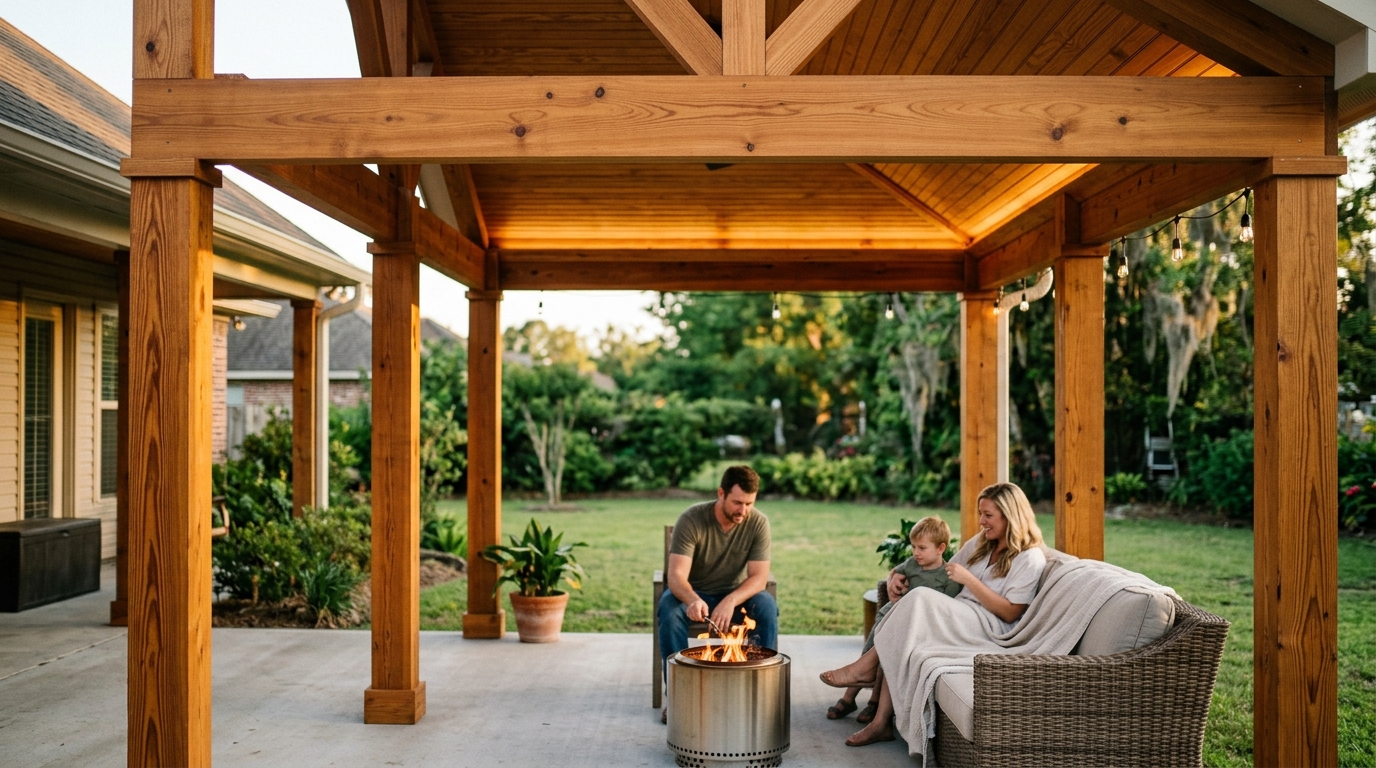
Outdoor living in Louisiana presents a unique set of environmental challenges that standard building materials simply cannot withstand. The combination of high humidity, intense UV exposure, and frequent heavy rainfall creates an ecosystem where rot, mold, and insect infestation thrive. According to the National Weather Service, the Gulf Coast region experiences some of the highest annual precipitation levels in the United States. This constant moisture exposure demands a building material with natural resilience. Cypress wood has emerged as the premier choice for homeowners in Lafayette and Acadiana because it offers a rare combination of natural durability, aesthetic warmth, and structural longevity that synthetic alternatives struggle to match.
The Science of Natural Durability
At the heart of cypress’s success in Louisiana is its cellular structure. Cypress wood contains a natural substance called cypressene, which acts as a powerful preservative. This organic compound repels water and inhibits the growth of fungi and bacteria that typically cause wood to decay. Research from the U.S. Forest Service indicates that heartwood from old-growth cypress can last up to 40 years without treatment when exposed to ground contact. This natural resistance makes it an ideal candidate for cypress patio covers and pergolas that must endure years of direct sun and rain.
Unlike pressure-treated lumber, which relies on chemical injections to resist rot, cypress achieves durability through its own biological makeup. This means the protection is inherent to the material. If the surface is scratched or cut, the underlying wood remains protected. This characteristic is vital for cypress pavilions where structural integrity is paramount. The wood does not leach harmful chemicals into the soil or surrounding plants, making it an environmentally responsible choice for outdoor kitchen frameworks and deck construction.
Cypress vs. Pine: A Critical Comparison
Homeowners often ask why they should choose cypress over the more common southern yellow pine. The answer lies in density and natural oils. Southern yellow pine is abundant in the region and is often pressure-treated to enhance its lifespan. However, pressure-treated pine can warp, twist, and split as it dries out after installation. Cypress, particularly heart cypress, has a tighter grain structure that resists this movement. Data from the WoodWorks organization highlights that cypress has a higher natural resistance to decay compared to most other domestic softwoods.
When comparing costs, cypress is a premium material, but its lifecycle cost is often lower. Pressure-treated pine may require resealing and replacement every 5 to 10 years in Louisiana’s harsh climate. Cypress structures can last decades with minimal intervention. For carports and garages, this durability translates to a structure that maintains its shape and strength against high winds and heavy loads. The initial investment in cypress pays off through reduced maintenance and extended service life.
Climate Adaptation and Moisture Resistance
Louisiana’s climate is defined by its humidity. The National Oceanic and Atmospheric Administration notes that humidity levels in the Gulf South frequently exceed 80 percent during summer months. High humidity accelerates the degradation of wood fibers, leading to swelling and shrinking cycles that compromise structural joints. Cypress wood has a low shrinkage factor, meaning it expands and contracts less than other woods. This stability is crucial for sunrooms and screened enclosures where precise fitting of screens and glass is required.
Furthermore, cypress is naturally resistant to termites and other wood-boring insects. These pests are prevalent in Louisiana and can cause catastrophic damage to untreated or poorly treated structures. The natural oils in cypress act as a deterrent, reducing the need for toxic chemical treatments. This makes cypress a safer option for swimming pool enclosures where children and pets play. The material’s ability to repel moisture also prevents the growth of mold and mildew, keeping outdoor spaces cleaner and healthier for your family.
Aesthetic Value and Aging Process
One of the most compelling reasons to choose cypress is its visual appeal. Cypress wood features a rich palette of colors, ranging from light golden hues to deep reddish-brown tones. The grain patterns are often straight and uniform, providing a clean, elegant look that complements both traditional and modern architectural styles. Architectural Digest frequently highlights cypress as a material that adds warmth and character to outdoor living spaces. Unlike vinyl or aluminum, which can look artificial, cypress offers a natural texture that enhances the beauty of your home.
Over time, cypress weathers to a distinguished silver-gray patina if left untreated. This aging process is often desired by homeowners for its rustic charm. However, if you prefer to maintain the original color, cypress takes stains and finishes beautifully. The wood’s porous nature allows for deep penetration of sealants, ensuring that the finish lasts longer than it would on less absorbent materials. This flexibility allows Acadiana Patios & Construction to customize the look of your insulated patio covers to match your home’s exterior perfectly.
Structural Applications for Outdoor Spaces
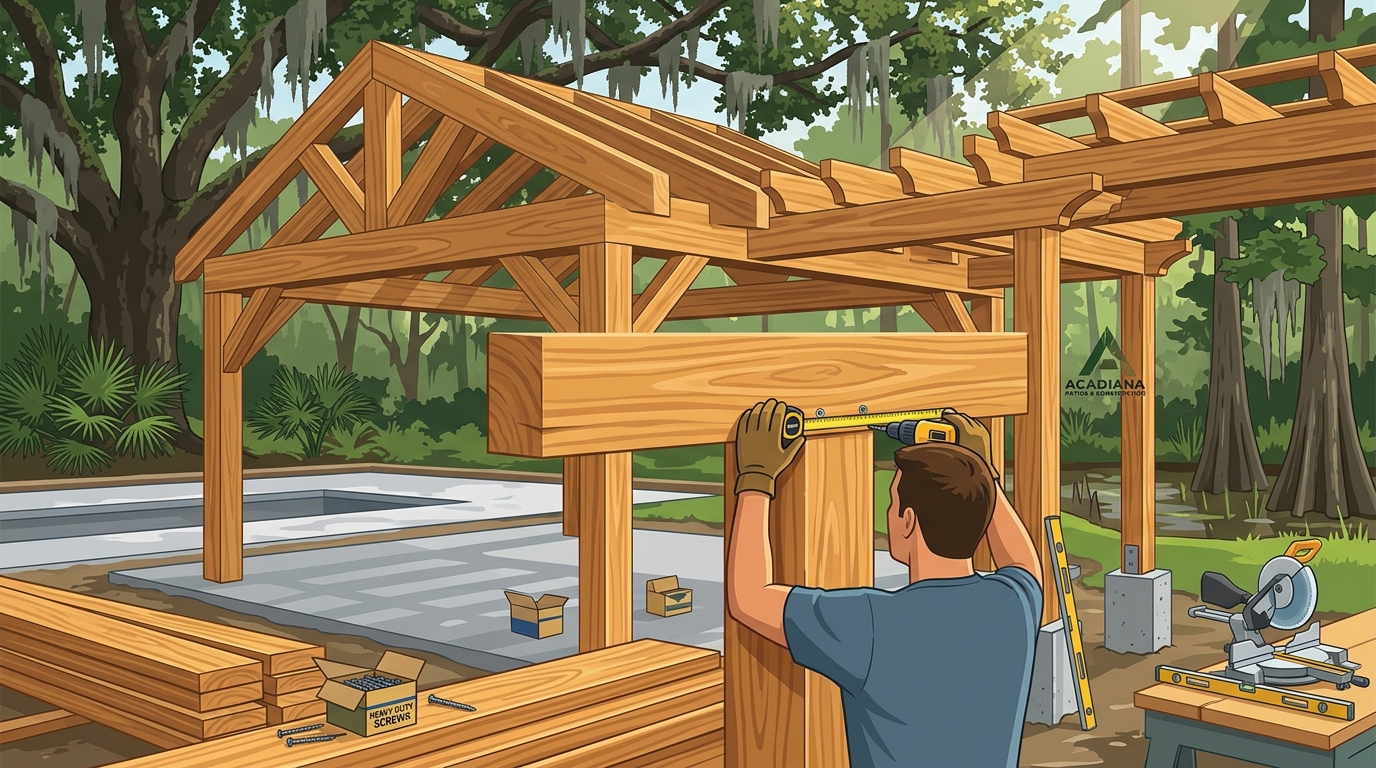
Cypress is versatile enough to be used in a wide variety of outdoor applications. Its strength-to-weight ratio makes it suitable for large spans, such as the beams in cypress patio covers that provide shade over large decks. The wood’s resistance to warping ensures that these covers remain level and secure over time. For concrete slab perimeters and RV shelters, cypress provides a sturdy frame that can support heavy roofing materials.
In outdoor kitchens, cypress is often used for cabinetry and framing. Its resistance to moisture and heat makes it a durable choice for areas near grills and fireplaces. The wood’s natural beauty also makes it a popular choice for decking and porches, where foot traffic can quickly wear down inferior materials. By using cypress, homeowners ensure that their investment remains structurally sound and visually appealing for years to come.
Maintenance and Long-Term Care
While cypress is highly durable, it still requires some maintenance to preserve its appearance and longevity. Regular cleaning with a mild detergent and water helps remove dirt and pollen that can accumulate on the surface. The Environmental Protection Agency recommends using biodegradable cleaners to avoid harming the surrounding landscape. It is also important to inspect the wood annually for any signs of damage or wear.
Applying a high-quality sealant or stain every few years can help protect the wood from UV rays and moisture. This step is particularly important for patio covers that are exposed to direct sunlight. The sealant creates a barrier that prevents the wood from drying out and cracking. At Acadiana Patios & Construction, we provide detailed maintenance guides to our clients to help them care for their cypress structures. Proper care can extend the life of your cypress wood by decades, ensuring that it remains a valuable part of your home.
Key Takeaways
- Natural Resistance: Cypress contains cypressene, a natural oil that repels water, rot, and insects without chemical treatment.
- Climate Suitability: Its low shrinkage factor makes it ideal for Louisiana’s high humidity and heavy rainfall.
- Longevity: Heart cypress can last up to 40 years in ground contact, outlasting pressure-treated pine.
- Aesthetic Flexibility: It accepts stains well and weathers to a silver-gray patina, offering versatile design options.
- Structural Integrity: Cypress is strong enough for large spans in pavilions and carports while resisting warping.
- Eco-Friendly: It is a sustainable choice that does not leach harmful chemicals into the environment.
- Value Addition: Installing cypress structures increases home value and reduces long-term maintenance costs.
Frequently Asked Questions
Is cypress wood better than pressure-treated pine for Louisiana weather?
Yes, cypress is generally superior because it has natural resistance to rot and insects, whereas pressure-treated pine relies on chemicals that can leach out over time. Cypress also has a tighter grain that resists warping better than pine.
How long does cypress last in outdoor structures?
Heart cypress can last 20 to 40 years or more in outdoor applications, depending on the level of exposure and maintenance. It is significantly more durable than standard softwoods.
Does cypress wood require a lot of maintenance?
Cypress requires minimal maintenance. Annual cleaning and occasional resealing are usually sufficient to keep it looking its best. It is more durable than many other woods with less upkeep.
Can cypress be used for swimming pool enclosures?
Absolutely. Cypress is highly resistant to moisture and mold, making it an excellent choice for swimming pool enclosures where humidity is constantly high.
What is the difference between heart cypress and sap cypress?
Heart cypress comes from the center of the tree and has the highest concentration of natural oils, making it the most durable. Sap cypress is from the outer layers and is less resistant to decay but is more affordable.
Is cypress wood expensive compared to other materials?
Cypress is a premium material with a higher upfront cost than pine or vinyl. However, its longevity and low maintenance needs often result in a lower total cost of ownership over time.
How does cypress age over time?
Untreated cypress will weather to a silver-gray color. If you want to maintain its original golden or reddish tones, you can apply a clear sealant or stain to protect it from UV rays.
Get Your Free Estimate
Ready to transform your outdoor living space with the durability and beauty of cypress? Contact Acadiana Patios & Construction today for a free estimate. Our team of experts is ready to help you design and build the perfect cypress patio cover, sunroom, or outdoor kitchen for your home in Lafayette and Acadiana. Call us at (337) 654-4337 or visit our contact page to schedule your consultation.