
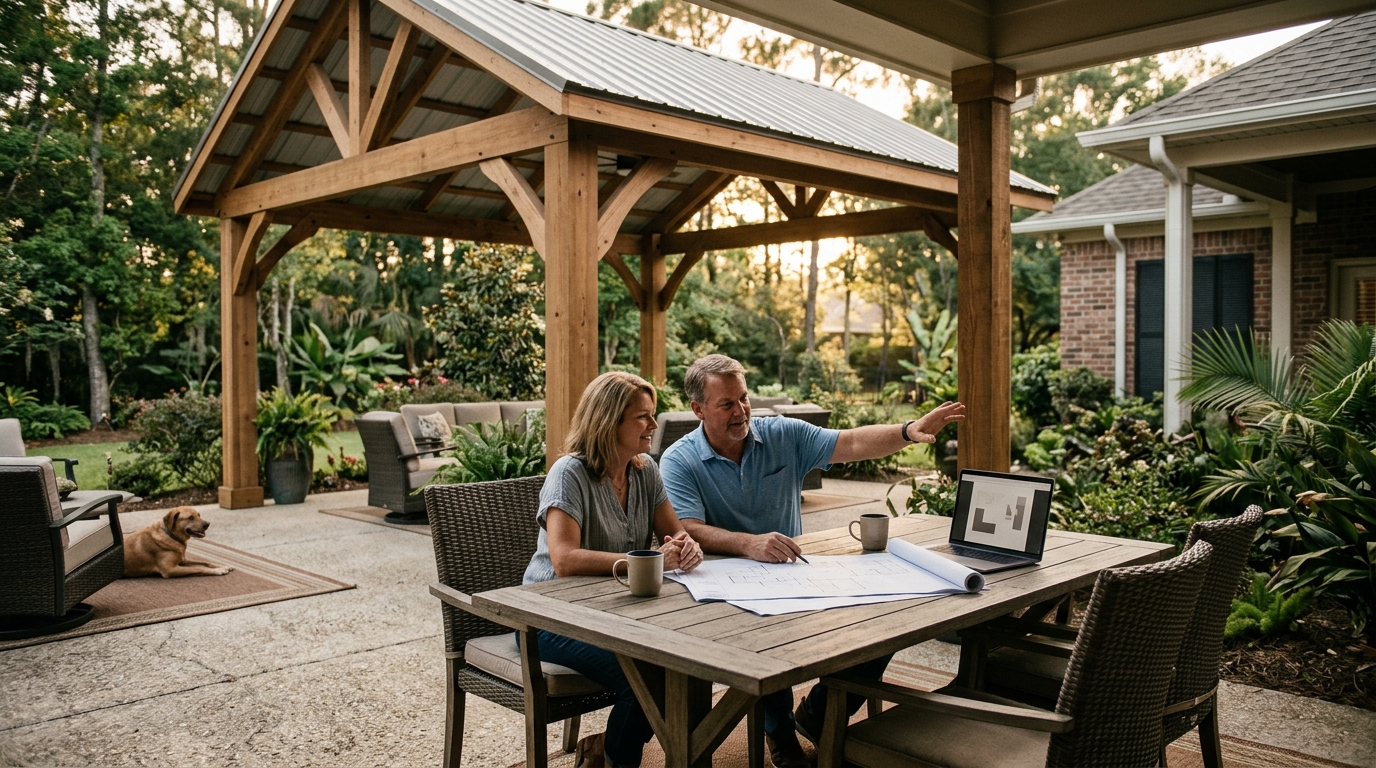
Homeowners in Lafayette often ask whether they can skip the red tape when adding a patio cover. The short answer is yes, you almost always need a permit. According to the City of Lafayette Department of Public Works, any permanent structure attached to a home requires a building permit to ensure it meets safety codes. Ignoring this rule can lead to fines, forced removal, or issues when selling your property. Acadiana Patios & Construction has navigated these regulations for over 30 years, ensuring every project in Acadiana is fully compliant.
Why Permits Are Mandatory in Lafayette
Building a patio cover is not just about aesthetics. It is a structural addition to your home. The City of Lafayette enforces strict building codes to protect residents from structural failures, especially during hurricane season. A permit ensures that your new structure can withstand high winds and heavy rain.
When you work with a licensed contractor like Acadiana Patios & Construction, the permitting process is handled for you. We submit the necessary plans to the city, pay the fees, and schedule inspections. This saves you time and ensures the project stays on track. Our team is a proud member of the Better Business Bureau with an A+ Rating, reflecting our commitment to ethical and compliant business practices.
Without a permit, your home insurance may not cover damages related to the structure. If a storm damages an unpermitted patio cover, your insurer could deny the claim. This is why understanding local regulations is critical for any homeowner in Louisiana.
The Permitting Process Explained
Understanding the workflow helps reduce stress. Here is how the process typically unfolds for a patio cover installation in Lafayette:
- Consultation: We assess your space and discuss design options, such as insulated patio covers or cypress patio covers.
- Plan Submission: Our team prepares detailed engineering plans that meet city code requirements.
- City Approval: We submit these plans to the City of Lafayette Department of Public Works. Approval usually takes a few weeks.
- Inspections: Once construction begins, city inspectors visit the site to verify structural integrity and electrical work (if applicable).
- Final Sign-Off: After passing inspection, the project is legally closed out.
This rigorous process ensures that your investment is protected. The Louisiana Home Builders Association provides guidelines that help contractors maintain high standards across the state. By following these guidelines, we ensure your patio cover is built to last.
Risks of Skipping the Permit
Some homeowners consider DIY or unlicensed contractors to save money. This is a costly mistake. The risks include:
- Fines and Penalties: The city can issue stop-work orders and fines for unpermitted construction.
- Structural Failure: Unpermitted structures may not be engineered for local wind loads, leading to collapse during storms.
- Resale Issues: When you sell your home, unpermitted work can delay closing or reduce the home's value.
- Insurance Gaps: As mentioned, insurance companies may refuse to pay for damages to unpermitted structures.
At Acadiana Patios & Construction, we carry full liability insurance and workman’s compensation. This protects both you and our team. We are licensed in Louisiana and adhere to all local codes. Our founder, Thad Theall, has served the Acadiana area for over 30 years, building a reputation on trust and quality.
Materials and Structural Integrity
The choice of materials impacts both the permit approval and the longevity of your patio cover. Common options include:
| Material | Pros | Cons | Best For |
|---|---|---|---|
| Cypress Wood | Natural beauty, rot-resistant | Requires regular maintenance | Traditional Acadiana homes |
| Insulated Aluminum | Low maintenance, energy efficient | Higher upfront cost | Year-round comfort |
| Screened Enclosures | Insect protection, airflow | Less weather protection | Pools and outdoor living |
| Concrete Patios | Durable, fire-resistant | Permanent, heavy | Foundation bases |
Each material has specific engineering requirements. For example, cypress pavilions require specific anchoring techniques to meet wind codes. Insulated covers may require electrical permits if lighting or fans are added. Our team handles all these details, ensuring your project is safe and compliant.
Frequently Asked Questions
How long does the permit process take?
Typically, the city review process takes 2 to 4 weeks. Construction can begin immediately after approval. We manage this timeline to minimize delays.
Can I build a patio cover without a permit?
No. Permanent structures attached to your home require a permit in Lafayette. Temporary structures may have different rules, but it is best to consult with a professional.
Does Acadiana Patios handle the permits?
Yes. We handle all permit applications, fees, and inspections as part of our service. This ensures a hassle-free experience for you.
What happens if I already have an unpermitted patio cover?
You may need to retroactively permit the structure. This involves submitting plans and passing inspection. Our team can assess your current structure and guide you through the process.
Are there HOA restrictions in Lafayette?
Many neighborhoods have HOA rules. We can help you navigate both city codes and HOA requirements to ensure your project is approved.
How much does a permit cost?
Permit fees vary based on the project size and value. We provide a detailed estimate that includes all costs, so there are no surprises.
Do you offer warranties on permitted work?
Yes. We offer warranties up to 10 years on our products. This warranty covers both the materials and the workmanship, ensuring your peace of mind.
Get Your Free Estimate Today
Don't risk your home's safety or value. Trust the experts who have served Lafayette and Acadiana since 1985. Contact Acadiana Patios & Construction today for a free estimate. We will guide you through the permitting process and build a patio cover that enhances your home and withstands the test of time.