Common Cypress Installation Mistakes in Louisiana Outdoor Projects
Outdoor living spaces in Louisiana face unique environmental pressures that can destroy even the most expensive materials if installed incorrectly. According to National Weather Service data, the region experiences high humidity and frequent heavy rainfall, creating an ideal breeding ground for fungal decay and insect infestation. Many homeowners assume that "cypress" is a monolithic material, but the difference between heartwood and sapwood can determine whether your patio cover lasts thirty years or three. This guide details the critical errors contractors and DIYers make when working with this premium wood, ensuring your investment withstands the Acadiana climate.
Understanding Cypress Heartwood vs. Sapwood
The most fundamental mistake in Louisiana outdoor projects is using the wrong grade of cypress. Not all cypress is created equal, and confusing heartwood with sapwood is a costly error. Cypress heartwood is the inner, older wood of the tree. It contains high levels of cypressene, a natural oil that provides exceptional resistance to rot, decay, and insects. This makes it the only suitable choice for structural elements like posts, beams, and rafters in humid climates.
Sapwood, on the other hand, is the outer, younger layer of the tree. It lacks the natural preservatives found in heartwood. When sapwood is exposed to the ground or high moisture levels, it decays rapidly. Research from the USDA Forest Service confirms that western red cypress heartwood has a mean specific gravity and natural durability rating that places it in the "very durable" category for above-ground use. Using sapwood for structural components in Lafayette, Louisiana, is essentially inviting premature structural failure.
When you request a quote for cypress patio covers, ensure the contract specifies "heartwood" or "clear heart" grades. If the contractor uses a mix of heartwood and sapwood to lower costs, the sapwood sections will likely show signs of rot within five to seven years, compromising the entire structure.
Moisture Management and Sealant Failures
Louisiana's humidity is relentless. A common installation error is failing to account for the wood's natural expansion and contraction cycles. Cypress is a stable wood, but it is not immune to movement. When installed without proper gaps or when sealed incorrectly, trapped moisture can lead to warping, cupping, and splitting.
Another critical error is the application of non-breathable sealants. Many homeowners apply thick, film-forming varnishes that look good initially but trap moisture inside the wood. As the wood expands and contracts, the sealant cracks, allowing water to penetrate deeper. EPA guidelines on indoor and outdoor air quality emphasize the importance of moisture control to prevent mold growth, a principle that applies equally to exterior wood structures. In the Acadiana region, mold and mildew can discolor wood and degrade its structural integrity over time.
Proper installation involves using penetrating oils or stains that allow the wood to breathe while repelling water. These finishes should be reapplied every two to three years. Neglecting this maintenance cycle is a primary reason why cypress structures in Louisiana lose their luster and durability faster than expected. Always ask your contractor about their recommended finishing protocol before signing a contract for cypress pavilions or pergolas.
Structural Integrity and Span Calculations
Cypress is strong, but it has limits. A frequent mistake is exceeding the recommended span for cypress beams and rafters. When spans are too long without adequate support, the wood can sag, leading to water pooling and eventual rot. This is particularly dangerous in areas with heavy snow loads, though less common in Louisiana, the weight of dense foliage and debris can still cause significant stress.
Engineers and experienced contractors use span tables to determine the maximum distance between supports based on the wood species, grade, and load requirements. Using a smaller diameter or lower-grade cypress than required for the span is a false economy. According to the American Wood Council, proper span calculations are essential for ensuring the safety and longevity of wooden structures. Ignoring these guidelines can result in costly repairs or complete structural replacement.
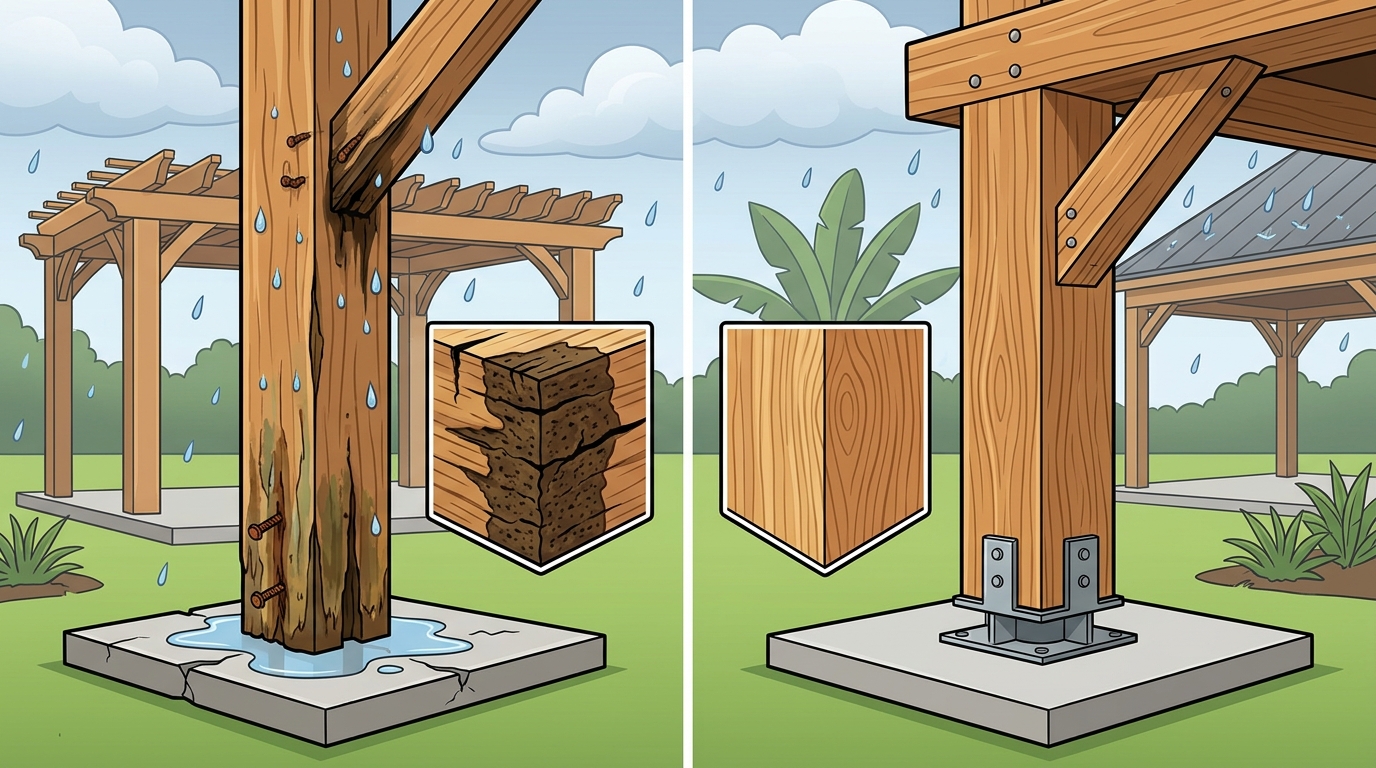
When designing outdoor kitchens or fireplaces with cypress elements, ensure that the structural framework is adequately supported. This includes using proper post bases that elevate the wood off the concrete slab to prevent wicking moisture from the ground. Direct contact between wood and concrete is a guaranteed path to rot.
Fastener Corrosion and Galvanic Reactions
The choice of fasteners is often overlooked, but it is critical in Louisiana's corrosive environment. Using standard steel nails or screws in cypress can lead to galvanic corrosion. Cypress contains natural acids that can react with certain metals, causing the fasteners to rust and stain the wood. This not only weakens the connection but also creates unsightly orange-brown streaks on the cypress surface.
The correct fasteners for cypress in humid climates are stainless steel or hot-dipped galvanized steel. Stainless steel is preferred for its superior corrosion resistance, especially in coastal or high-humidity areas. Data from the National Association of Home Builders highlights the importance of compatible materials to prevent premature failure in construction projects. Using the wrong fasteners can void warranties and lead to structural issues.
Additionally, pre-drilling holes for fasteners is essential to prevent the wood from splitting. Cypress is a dense wood, and driving nails or screws without pre-drilling can cause cracks that compromise the structural integrity and allow moisture ingress. Always verify that your contractor uses the correct fastener type and installation technique for decks and porches or other cypress-heavy projects.
Long-Term Maintenance and Weathering
Cypress is known for its durability, but it is not maintenance-free. A common mistake is assuming that cypress will weather to a silver-gray patina without any care. While this is true for some applications, in Louisiana's intense sun and rain, unsealed cypress can become brittle and crack. Regular maintenance is required to preserve its color and structural health.
UV protection is vital. Sunlight breaks down the lignin in wood, causing it to gray and weaken. Applying a UV-inhibiting stain or sealant every two to three years helps maintain the wood's integrity and appearance. Energy efficiency guidelines from the Department of Energy suggest that maintaining exterior wood structures can improve the overall efficiency and value of a home by preventing moisture damage and rot.
Regular inspection for insect activity, such as termites or carpenter ants, is also crucial. While cypress heartwood is resistant to insects, sapwood and damaged areas are vulnerable. Early detection and treatment can prevent extensive damage. If you are considering sunrooms or screened enclosures with cypress frames, include a maintenance plan in your budget to ensure long-term performance.
Choosing the Right Installation Partner
Even the best materials can fail if installed by an unqualified contractor. In Louisiana, it is essential to work with a company that understands the local climate and building codes. Acadiana Patios & Construction has been serving the Lafayette and Acadiana areas since 1985. Our experience with cypress installation ensures that all the above mistakes are avoided.
We use only heartwood cypress for structural components, specify appropriate fasteners, and provide detailed maintenance guides for every project. Our team is trained in the latest installation techniques and adheres to the highest industry standards. Our A+ rating with the Better Business Bureau reflects our commitment to customer satisfaction and quality workmanship.
When planning your outdoor project, do not compromise on quality. Choose a contractor who prioritizes proper material selection, structural integrity, and long-term durability. Contact us today for a free estimate and discover the difference that expert installation makes.
Key Takeaways
- Always specify heartwood cypress for structural elements to ensure rot and insect resistance.
- Use stainless steel or hot-dipped galvanized fasteners to prevent corrosion and staining.
- Apply penetrating oils or stains that allow the wood to breathe, avoiding non-breathable sealants.
- Adhere to span tables and structural guidelines to prevent sagging and failure.
- Elevate wood structures off concrete to prevent moisture wicking from the ground.
- Perform regular maintenance, including UV protection and insect inspections, every two to three years.
- Work with experienced contractors who understand the specific challenges of the Louisiana climate.
Frequently Asked Questions
Is heartwood cypress worth the extra cost over sapwood?
Yes, heartwood cypress contains natural oils that provide superior resistance to rot, decay, and insects. Sapwood lacks these preservatives and will decay much faster in Louisiana's humid climate, making heartwood a more cost-effective long-term investment.
How often should I reseal my cypress outdoor structure?
It is recommended to inspect and reseal cypress structures every two to three years. The frequency may vary depending on the amount of sun exposure and weather conditions in your specific area.
Can I use standard steel nails with cypress?
No, standard steel nails can corrode due to the natural acids in cypress, leading to staining and weakened connections. Use stainless steel or hot-dipped galvanized fasteners instead.
Does cypress require a lot of maintenance?
Cypress is relatively low maintenance compared to other woods. Regular cleaning and occasional resealing are sufficient to maintain its appearance and durability. Neglecting maintenance can lead to premature weathering and damage.
Why is it important to elevate cypress posts off the ground?
Direct contact with the ground or concrete allows moisture to wick into the wood, leading to rot. Elevating posts using metal bases or concrete piers prevents this moisture transfer and extends the life of the structure.
What is the difference between cypress and cedar for outdoor projects?
While both are durable, cypress heartwood has higher natural oil content, making it more resistant to rot and insects. Cedar is also durable but may require more frequent sealing and maintenance in high-humidity environments.
How long does a properly installed cypress patio cover last?
A properly installed and maintained cypress patio cover can last 30 years or more. The lifespan depends on the quality of the wood, installation techniques, and the level of ongoing maintenance.
Ready to Build Your Dream Outdoor Space?
Don't let common installation mistakes ruin your outdoor investment. Trust the experts at Acadiana Patios & Construction to deliver high-quality, durable cypress installations that stand the test of time. Contact us today for a free estimate and experience the difference that professional craftsmanship makes.