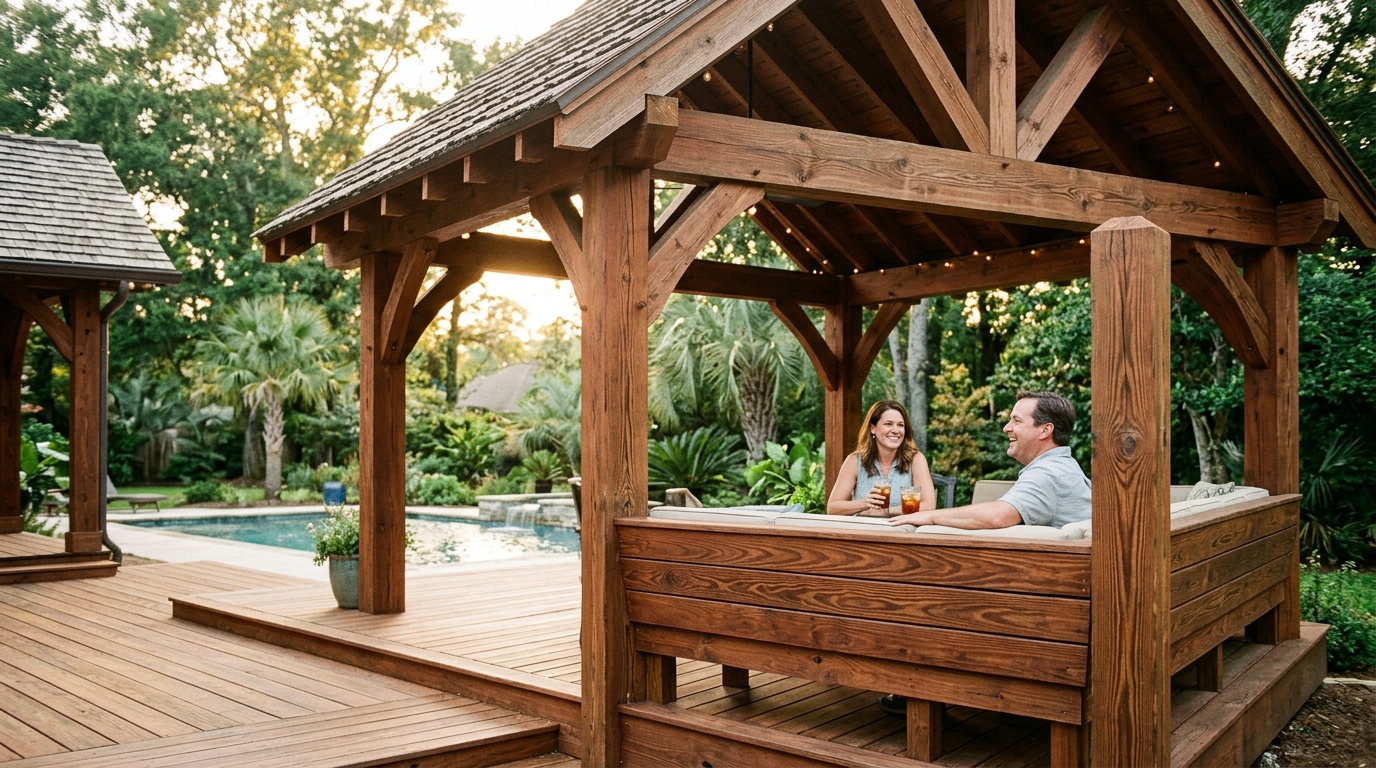
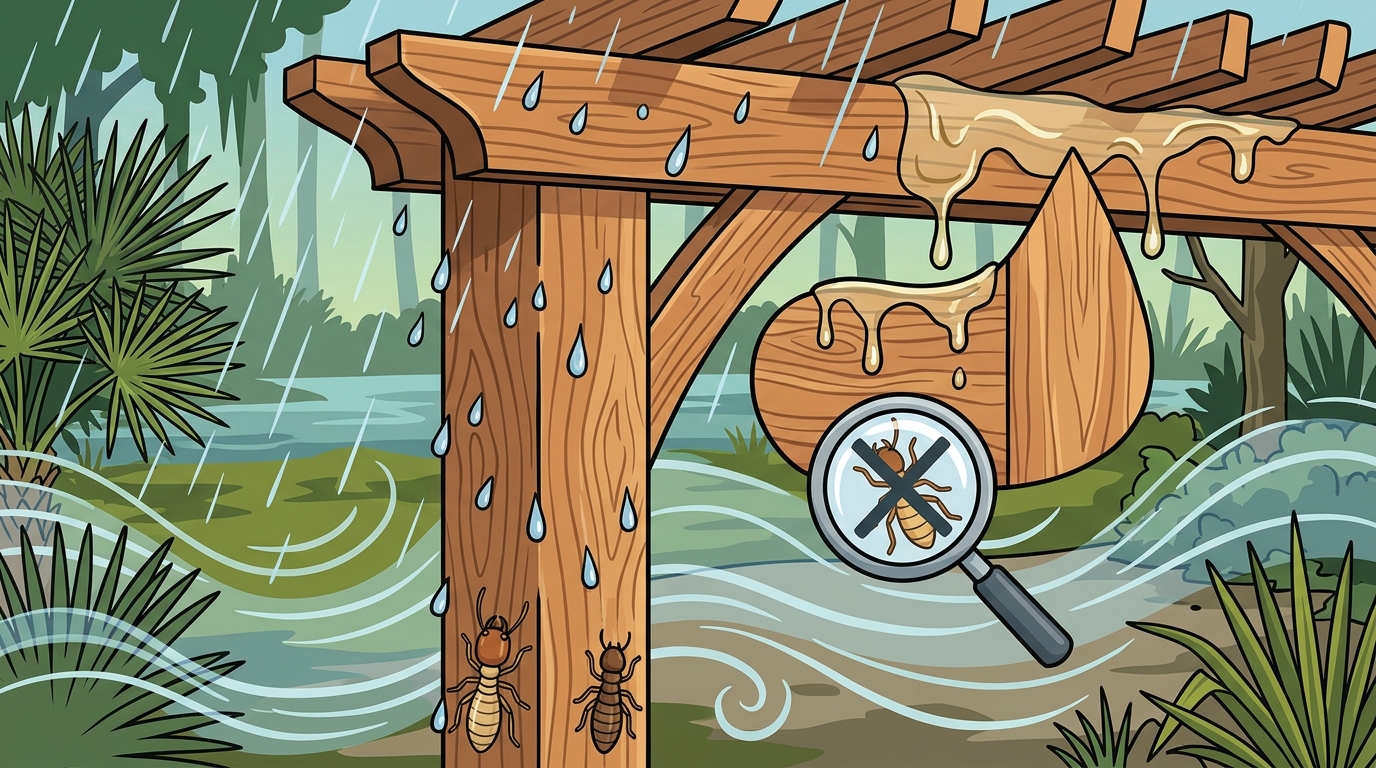
Outdoor living in Louisiana is a way of life, but the local climate is notoriously hostile to building materials. High humidity, frequent rainfall, and aggressive insect populations can destroy standard lumber in a matter of years. This is why cypress is the undisputed standard for outdoor structures in the region. According to industry data on regional construction materials, cypress heartwood contains natural oils that provide superior resistance to decay and insects compared to other softwoods. This natural durability makes it the ideal choice for homeowners in Lafayette and Acadiana who want structures that last. (Louisiana Cypress Tree)
The Science of Natural Resistance
Cypress is not just another softwood. It is a unique material that has evolved to survive in swampy, waterlogged environments. The secret lies in its cellular structure. Cypress heartwood contains a substance called cypressene. This natural oil acts as a preservative. It repels water and deters insects from burrowing into the wood.
When you compare cypress to pine or fir, the difference is stark. Standard pine requires heavy chemical treatment to survive outdoors. Cypress achieves this protection naturally. This means your patio cover or sunroom does not rely on synthetic chemicals to withstand the Louisiana heat and humidity. The wood breathes while remaining protected from rot.
This natural defense system is why cypress patio covers are so popular in Acadiana. They do not warp or split as easily as untreated lumber. The dimensional stability of cypress ensures that your structure remains straight and true for decades. This is critical for maintaining the aesthetic appeal of your home.
Heartwood vs. Sapwood: What Matters
Not all cypress is created equal. When selecting wood for your outdoor project, you must understand the difference between heartwood and sapwood. This distinction is vital for longevity and performance.
Cypress heartwood is the inner core of the tree. It is rich in cypressene and has a rich, reddish-brown color. This is the only part of the tree that offers significant decay and insect resistance. If you are building a permanent structure, you must specify heartwood. It is the gold standard for durability.
Sapwood is the outer layer of the tree. It is pale yellow and lacks the protective oils. Sapwood is susceptible to rot and insect damage if used outdoors. It is often used for interior framing or temporary structures. However, for a cypress pavilion or pergola, heartwood is non-negotiable. It ensures that your investment is protected from the start.
At Acadiana Patios & Construction, we prioritize heartwood for all our exterior projects. We understand that cutting corners on material grade leads to premature failure. Our qualified staff helps you identify high-grade heartwood during the design phase. This ensures that your structure meets the highest industry standards.
Structural Applications in Louisiana
Cypress is versatile. It is used for a wide range of outdoor structures. Its strength-to-weight ratio makes it suitable for both large spans and detailed craftsmanship. Here are the most common applications in Louisiana.
Patio Covers and Pergolas
Patio covers provide shade and protection from rain. Cypress is ideal for this because it resists warping. A warped cover can leak or look unsightly. Cypress maintains its shape even in high humidity. This makes it perfect for patio covers that need to stay level and secure.
Decks and Porches
Decks and porches are high-traffic areas. They need to withstand foot traffic and furniture weight. Cypress is strong enough to support heavy loads. It also has a beautiful grain that takes stain and sealant well. This allows homeowners to customize the look of their decks and porches to match their home.
Outdoor Kitchens and Fireplaces
Heat and smoke can damage wood. Cypress is naturally resistant to these elements. It does not crack easily under thermal stress. This makes it a safe choice for outdoor kitchens and fireplaces. The natural oils also help repel grease and moisture from cooking.
Swimming Pool Enclosures
Pool areas are the most humid environments on a property. Standard wood rots quickly here. Cypress heartwood is highly resistant to water damage. It does not swell or shrink significantly with moisture changes. This makes it the best choice for swimming pool enclosures. It ensures that your pool area remains dry and comfortable.
Maintenance and Longevity
One of the biggest advantages of cypress is its low maintenance requirement. While no wood is completely maintenance-free, cypress requires less care than most alternatives. This is due to its natural resistance to decay and insects.
Most homeowners only need to clean their cypress structures annually. A simple wash with soap and water removes dirt and mildew. For those who want to preserve the natural color, a clear sealant is recommended. This protects the wood from UV rays. Without UV protection, cypress will weather to a silver-gray patina. This is also a beautiful look, but it requires a different maintenance approach. (Louisiana Cypress Tree)
Compare this to pressure-treated pine. Pine often requires annual staining or sealing to prevent rot. If you miss a year, the wood can begin to degrade. Cypress does not have this vulnerability. Its natural oils do the work for you. This saves homeowners time and money over the life of the structure.
According to long-term studies on building materials, properly maintained cypress structures can last 30 years or more. This longevity provides a high return on investment. It adds value to your home and improves your quality of life. You can enjoy your outdoor space without worrying about constant repairs.
Cost Analysis and Value
Cypress is more expensive than pressure-treated pine. However, the initial cost is just one part of the equation. You must consider the total cost of ownership. This includes maintenance, repairs, and replacement.
Pressure-treated pine may cost less upfront. But it often needs to be replaced every 10 to 15 years. Cypress can last 30 years or more with minimal care. This means you avoid the cost of a second installation. You also avoid the hassle of finding a contractor and disrupting your home.
Here is a comparison of common outdoor materials:
| Material | Upfront Cost | Lifespan | Maintenance Level | Best For |
|---|---|---|---|---|
| Cypress Heartwood | High | 30+ Years | Low | Permanent Structures |
| Pressure-Treated Pine | Low | 10-15 Years | High | Budget Projects |
| Redwood | Very High | 20-30 Years | Medium | High-End Aesthetics |
| Composite | Very High | 25+ Years | Low | Zero Maintenance |
As you can see, cypress offers a balanced profile. It is not the cheapest option. But it is not the most expensive either. It sits in the sweet spot of value and performance. For homeowners in Lafayette and Acadiana, this makes it the smartest choice.
Key Takeaways
- Natural Oils: Cypress heartwood contains cypressene, which repels insects and water.
- Heartwood Only: Always specify heartwood for outdoor structures to ensure durability.
- Longevity: Properly maintained cypress structures can last 30 years or more.
- Low Maintenance: Requires less frequent sealing and staining than pine.
- Regional Standard: Cypress is the traditional and most effective wood for Louisiana's climate.
- Value: Higher upfront cost is offset by lower long-term maintenance and replacement costs.
- Versatility: Suitable for patio covers, decks, pergolas, and pool enclosures.
Frequently Asked Questions
Is cypress wood rot-resistant?
Yes, cypress heartwood is highly resistant to rot. It contains natural oils that prevent decay. This makes it ideal for outdoor use in humid climates like Louisiana.
What is the difference between heartwood and sapwood?
Heartwood is the inner core of the tree. It is dark and resistant to decay. Sapwood is the outer layer. It is light and not resistant to decay. Always use heartwood for outdoor structures.
Does cypress need to be sealed?
Cypress does not require sealing to prevent rot. However, sealing protects the wood from UV rays. This helps maintain its color. Without sealant, cypress will turn silver-gray over time.
How long does a cypress patio cover last?
A cypress patio cover can last 30 years or more. This depends on the quality of the wood and the level of maintenance. Heartwood provides the longest lifespan.
Is cypress more expensive than pine?
Yes, cypress is more expensive than pressure-treated pine. However, it lasts longer and requires less maintenance. This makes it more cost-effective over time.
Can cypress be used for pool enclosures?
Yes, cypress is excellent for pool enclosures. It resists the high humidity and moisture found around pools. It does not warp or swell easily.
What is cypressene?
Cypressene is a natural oil found in cypress heartwood. It acts as a preservative. It repels insects and water. This is what makes cypress so durable.
Get Your Free Estimate
Ready to build a structure that lasts? Acadiana Patios & Construction has been serving Lafayette and Acadiana since 1985. We specialize in cypress patio covers, pavilions, and decks. Our team is trained to select the best heartwood for your project. We ensure that your structure is built to last.
Contact us today for a free estimate. Call (337) 654-4337 or visit our contact page. Let us help you create an outdoor space that stands the test of time.