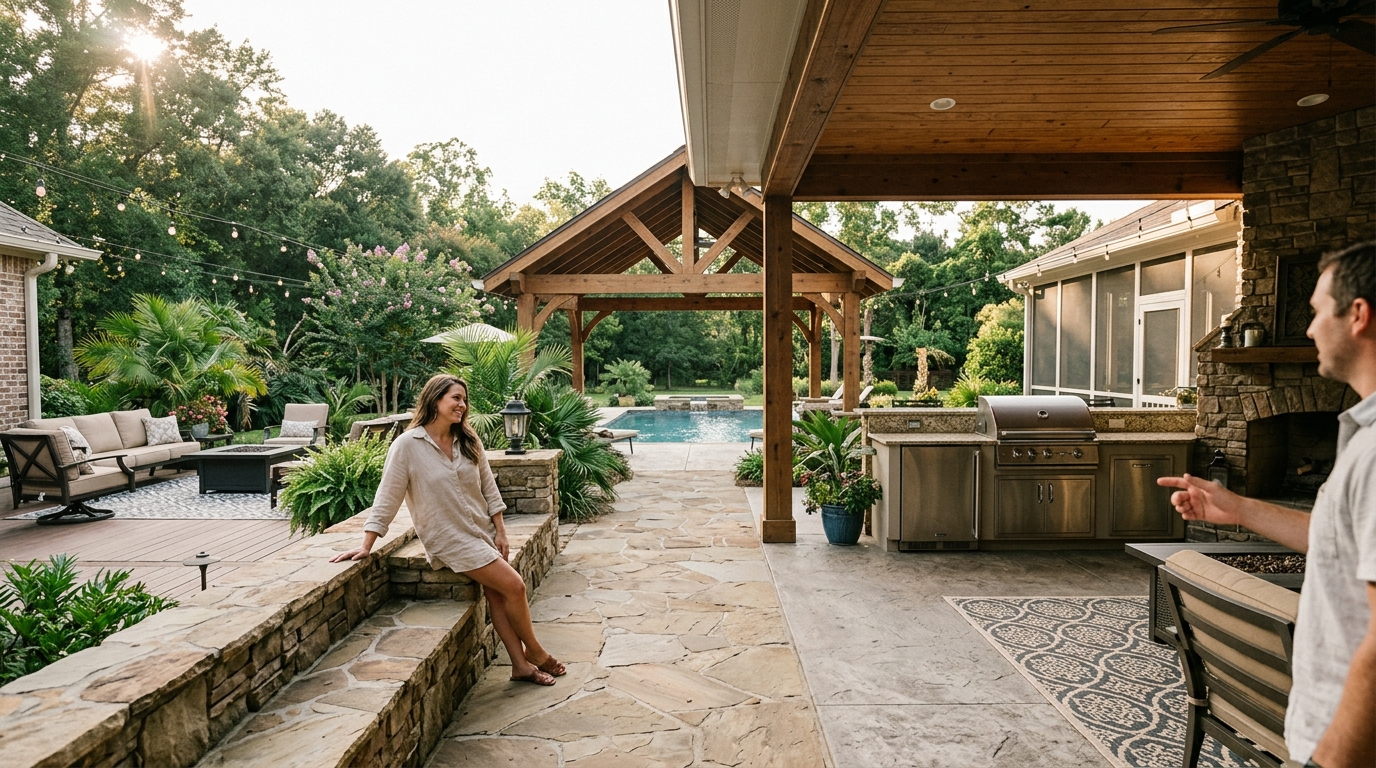
Expanding your living space outdoors is one of the most impactful home improvements you can make in the Acadiana region. According to recent industry data, homeowners who invest in professional patio construction often see a return on investment ranging from 50 to 80 percent upon resale. This financial benefit is driven by the increased functional square footage and the aesthetic appeal that custom designs bring to a property. In Lafayette, Louisiana, the climate demands specific architectural considerations to ensure durability against humidity and seasonal storms. This guide explores how to navigate the complex process of designing and building a patio that enhances both your home's value and your daily quality of life. (Contact 8211 Acadiana Patios)
Understanding Patio Types and Materials
Before breaking ground, it is essential to define the type of patio structure that aligns with your lifestyle. A patio is fundamentally a paved outdoor area adjoining a residence, but in modern construction, the term often encompasses covered structures, sunrooms, and screened enclosures. The material choice dictates the longevity and maintenance requirements of your investment. (Acadiana Patios amp Construction)
Concrete and Colored Slabs
Concrete remains the most popular foundation for patios due to its versatility and cost-effectiveness. Concrete is a composite material composed of coarse aggregate bonded together with a fluid paste of cement and water. In the humid climate of Louisiana, proper sealing is critical to prevent moisture intrusion and cracking. Acadiana Patios & Construction specializes in concrete coloring techniques that allow homeowners to mimic the look of natural stone, slate, or brick without the associated high costs. This method provides a seamless, durable surface that can withstand heavy foot traffic and furniture loads. (Blogs 8211 Acadiana Patios)
Cypress Wood Structures
For those seeking a more traditional or rustic aesthetic, cypress wood is a regional staple. Cypress is a softwood timber known for its natural resistance to decay, insects, and moisture. This makes it an ideal choice for patio covers, pergolas, and arbors in the Acadiana area. The wood's natural oils protect it from the elements, reducing the need for frequent chemical treatments. However, cypress structures require periodic staining or sealing to maintain their color and prevent weathering from turning gray over time.
Aluminum and Vinyl Enclosures
Screened enclosures and pool enclosures offer a different category of patio experience. These structures focus on keeping insects and debris out while allowing airflow. A screened enclosure is a structural framework covered with mesh material designed to prevent insect entry while maintaining ventilation. Aluminum frames are preferred for their rust resistance and lightweight strength, often backed by warranties of up to 10 years. These enclosures effectively extend the usable season of your patio, allowing for enjoyment even during peak bug seasons.
Critical Design Considerations for Acadiana
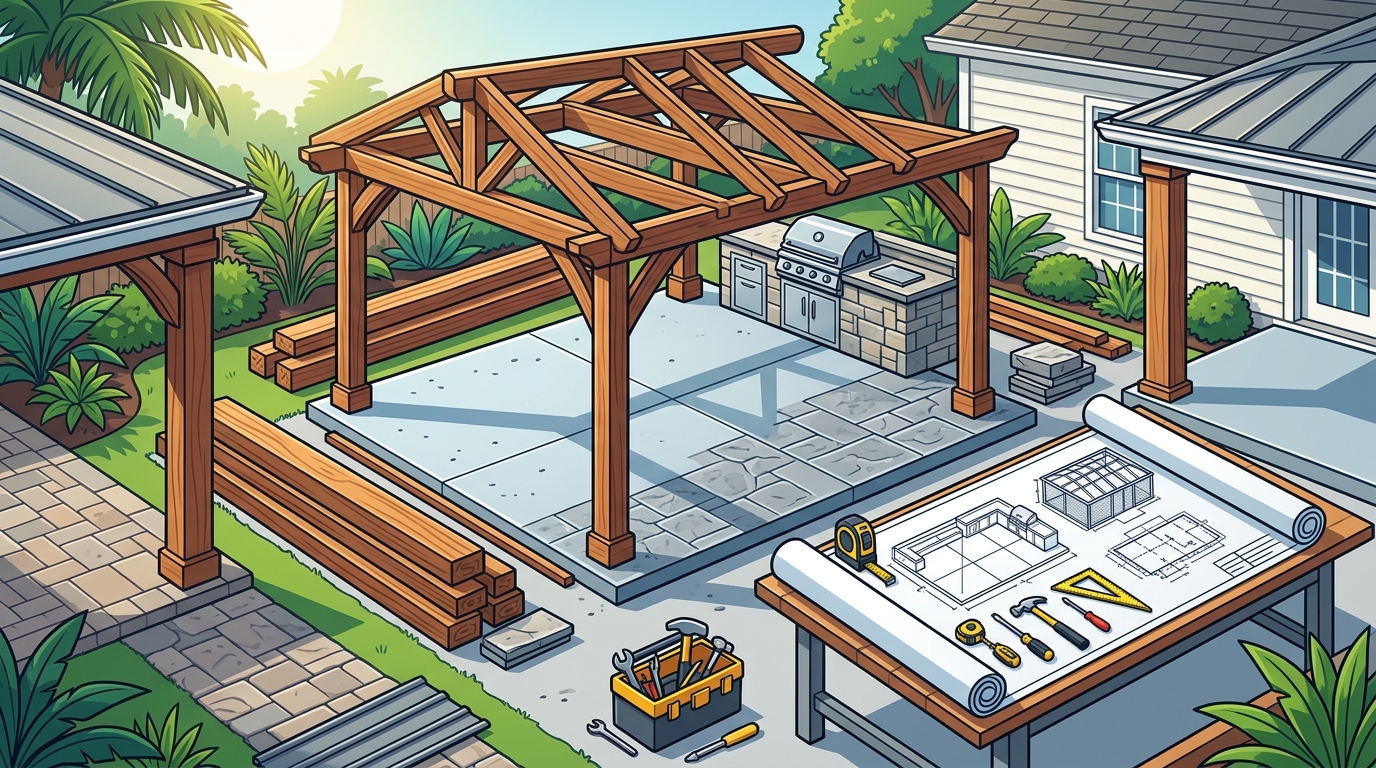
Designing a patio in Lafayette requires more than just aesthetic preference. Local environmental factors play a massive role in structural integrity and comfort. The region experiences high humidity, heavy rainfall, and occasional severe weather events. These conditions necessitate specific design choices to protect your investment.
Climate Adaptation
Proper drainage is the first line of defense against water damage. Your patio design must include a slight slope away from your home to direct rainwater into gutters or drainage systems. Without adequate drainage, standing water can lead to foundation issues and mold growth. Additionally, the orientation of your patio should consider the sun's path. In Louisiana, afternoon sun can be intense, making shade structures not just a luxury but a necessity for comfort.
Architectural Harmony
Your new patio should complement the existing architecture of your home. Whether you own a traditional Creole cottage or a modern farmhouse, the materials and colors of your patio should create a cohesive look. For instance, a cypress pavilion might blend seamlessly with a rustic home, while a sleek aluminum insulated cover might suit a contemporary property. Consulting with a local expert ensures that your design respects the neighborhood's character while meeting your personal needs.
Insulated Patio Covers vs. Open Structures
One of the most significant decisions in patio design is whether to install an open structure or an insulated cover. This choice fundamentally changes how you can use the space throughout the year.
The Benefits of Insulation
Insulated patio covers are engineered to provide thermal regulation. They feature a core of rigid foam insulation sandwiched between metal panels, which helps keep the space cooler in the summer and warmer in the winter. This makes the area suitable for use as an extension of your living room, complete with ceiling fans and lighting. According to energy efficiency studies, properly insulated outdoor spaces can reduce the thermal load on your home by providing a buffer zone against extreme temperatures. This is particularly valuable in Lafayette, where summer heat can be oppressive.
Open Pergolas and Pavilions
Open structures like cypress pergolas and pavilions offer a different kind of appeal. They provide partial shade and a sense of enclosure without the feeling of being indoors. These structures are excellent for growing vines or climbing plants, which can create natural cooling canopies over time. They are generally more affordable than insulated covers and allow for unobstructed views of the sky, which many homeowners find relaxing during thunderstorms.
Integrating Outdoor Kitchens and Fireplaces
Modern patio design often includes built-in features that transform the space into a true outdoor room. These additions increase the functionality of the area and provide entertainment value for family and guests.
Outdoor Kitchens
An outdoor kitchen allows you to cook and entertain without being confined to the indoors. Key components include a grill, side burners, a refrigerator, and ample counter space. In Lafayette's humid climate, it is crucial to use stainless steel appliances and materials that resist corrosion. Proper ventilation is also necessary to manage smoke and heat. Integrating an outdoor kitchen with your patio design requires careful planning of utility lines for gas and electricity.
Fireplaces and Fire Pits
Adding a fireplace or fire pit extends the usability of your patio into the cooler months. A well-designed fireplace serves as a focal point, drawing people together and providing ambient light and warmth. Gas fireplaces are often preferred for their ease of use and cleanliness, while wood-burning options offer a traditional ambiance. Safety clearances from combustible materials like wood decks or cypress beams must be strictly adhered to during installation.
Choosing the Right Contractor in Lafayette
The success of your patio project depends heavily on the contractor you choose. In the home improvement industry, experience and local knowledge are paramount. You need a team that understands the specific building codes and environmental challenges of Lafayette and Acadiana.
Experience and Credentials
Look for a contractor with a long-standing history in the community. A company that has been serving the area for over 30 years, such as Acadiana Patios & Construction, has likely weathered numerous storms and adapted its techniques to meet local demands. Verify that the contractor is licensed in Louisiana and carries full liability insurance and workers' compensation. This protects you from potential liabilities in case of accidents on your property.
Quality of Materials
Premium materials are the foundation of a durable patio. Reputable contractors partner with leading manufacturers to source high-quality products. For example, partnerships with companies like Elite Aluminum, Inc. ensure that metal structures meet high standards for strength and finish. Ask your contractor about the warranties provided on both materials and labor. A confident contractor will stand behind their work with comprehensive guarantees.
Customer Reviews and References
Check online reviews and ask for references from past clients. Look for feedback on communication, timeliness, and the final quality of the work. Membership in professional organizations like the Better Business Bureau (BBB) and local home builders associations is a strong indicator of ethical business practices. An A+ rating with the BBB, for instance, signifies a commitment to resolving customer issues promptly and professionally.
Long-Term Maintenance and Care
Once your patio is built, proper maintenance will ensure it remains beautiful and functional for decades. The specific maintenance needs depend on the materials used.
Concrete Care
Concrete patios should be sealed every two to three years to protect against moisture and stains. Regular cleaning with a mild detergent and a stiff brush will remove dirt and mildew. Inspect the surface annually for cracks, which should be filled promptly to prevent water from seeping underneath and causing further damage.
Wood and Cypress Maintenance
Cypress wood structures require periodic inspection for signs of rot or insect damage. Applying a fresh coat of stain or sealant every three to five years will preserve the wood's color and protect it from the elements. Ensure that gutters and downspouts are clear to prevent water from splashing onto the wood, which can accelerate decay.
Screen and Enclosure Upkeep
Screened enclosures should be checked for tears or loose frames after severe weather. Repairing small tears quickly prevents them from expanding. Aluminum frames should be cleaned with soapy water to remove salt and dirt buildup, which can cause corrosion over time. Lubricate moving parts, such as retractable screens or doors, to ensure smooth operation.
Key Takeaways
- ROI Potential: Professional patio construction can yield a 50 to 80 percent return on investment, significantly boosting home value.
- Material Choice: Cypress wood offers natural decay resistance, while concrete provides a versatile and durable foundation.
- Insulation Benefits: Insulated patio covers provide thermal regulation, extending the usable season of your outdoor space.
- Local Expertise: Choosing a contractor with over 30 years of experience in Lafayette ensures knowledge of local climate challenges.
- Quality Assurance: Partnerships with leading manufacturers like Elite Aluminum, Inc. guarantee high-quality, warrantied products.
- Professional Credentials: Look for contractors with an A+ BBB rating and membership in local home builders associations.
- Maintenance Needs: Regular sealing of concrete and staining of wood are essential for long-term durability in Louisiana's humidity.
Frequently Asked Questions
How long does it take to build a custom patio in Lafayette?
The timeline varies based on the complexity of the project. A simple concrete slab may take one to two weeks, while a complex insulated patio cover with an outdoor kitchen can take four to eight weeks. Weather delays are common in Louisiana, so it is important to build in buffer time.
Do I need a permit for patio construction in Lafayette?
Yes, most structural patio projects, especially those involving electrical or gas lines, require permits from the local building authority. A reputable contractor will handle the permit process as part of their service.
What is the difference between a pavilion and a pergola?
A pavilion typically has a solid roof, providing full shade and protection from rain. A pergola has an open lattice roof, offering partial shade and allowing sunlight to filter through. Pergolas are often used for climbing plants, while pavilions are used for covered entertainment areas.
Can I add an outdoor kitchen to an existing patio?
Yes, it is possible to add an outdoor kitchen to an existing patio. However, you must ensure that the foundation can support the weight of the masonry or stone structures. Utility lines for gas and electricity must also be accessible or extended to the new location.
How do I protect my patio from hurricanes?
While patios are not designed to withstand direct hurricane impacts, proper construction techniques can enhance resilience. Using impact-resistant materials, securing loose furniture, and ensuring strong structural connections to the home are critical steps. Insulated covers with proper anchoring are generally more wind-resistant than open structures.
What warranties are typically offered on patio covers?
Warranties vary by manufacturer and material. Aluminum structures often come with warranties of up to 10 years against corrosion and finish defects. Wood structures may have warranties against structural defects but require regular maintenance to remain valid. Always ask your contractor for specific warranty details.
Is insulated patio cover worth the extra cost?
For homeowners who plan to use their patio year-round, an insulated cover is often worth the investment. It reduces heat gain in the summer and heat loss in the winter, making the space more comfortable and energy-efficient. It also reduces noise from rain, which is a significant benefit in Louisiana's rainy seasons.
Get Your Free Estimate Today
Transforming your outdoor space is a significant decision that requires expert guidance. Acadiana Patios & Construction has been serving Lafayette and the Acadiana area since 1985, providing high-quality patio design, installation, and remodeling services. Our team of trained professionals is dedicated to delivering exceptional craftsmanship and customer service. We are proud members of the Better Business Bureau with an A+ rating and the local home builders associations. Contact us today to schedule your free estimate and start planning your dream patio.