Common Hurricane-Prep Mistakes for Acadiana Outdoor Structures and How to Fix Them
Acadiana residents know that hurricane season is not a matter of if, but when. With the Gulf of Mexico just miles away, the region faces significant wind loads and storm surge risks every year. According to the National Hurricane Center, the average Atlantic hurricane season produces 14 named storms, with 7 becoming hurricanes. For homeowners in Lafayette and surrounding parishes, protecting your investment is critical. Many property owners make costly errors during their preparation phase, leading to preventable damage to patios, sunrooms, and carports. This guide outlines the most frequent structural oversights and provides actionable solutions to secure your home.
Assessing Structural Integrity and Anchoring
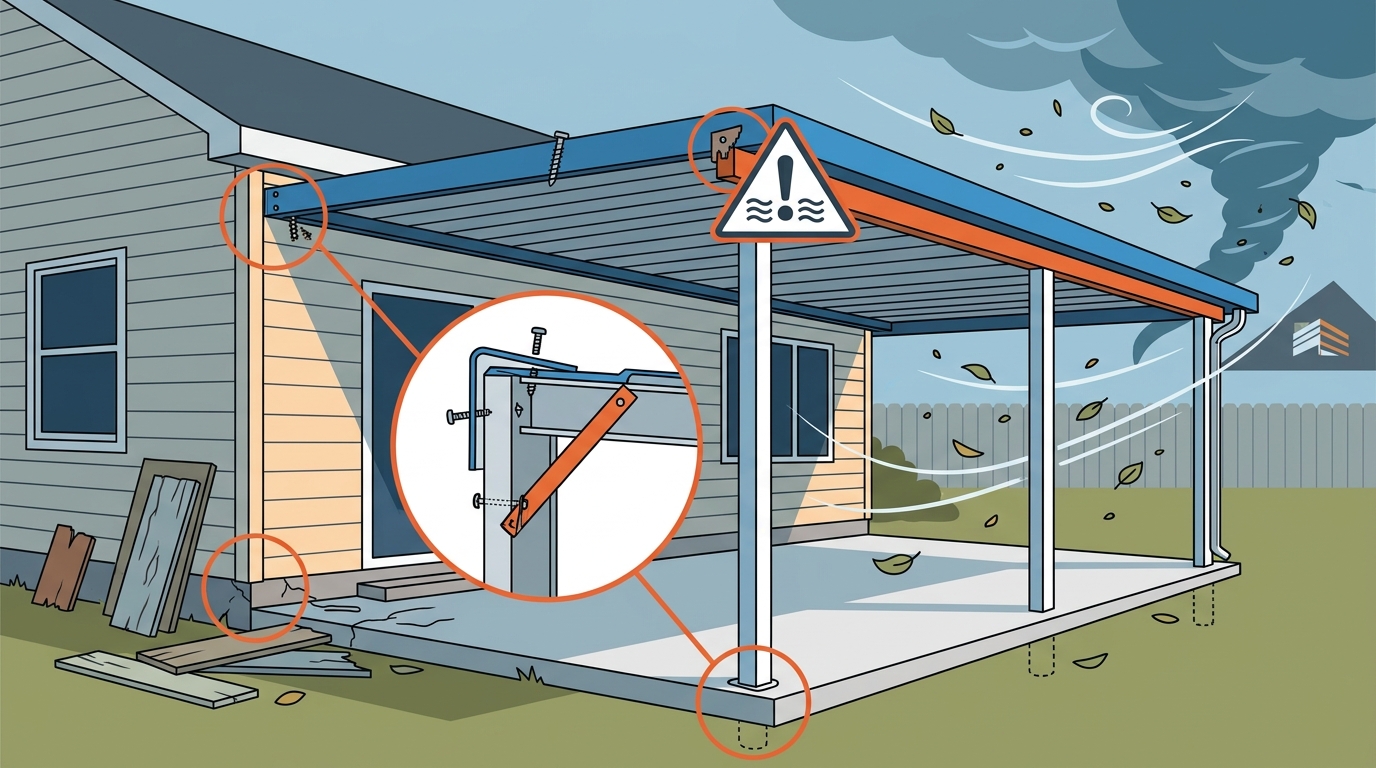
One of the most common mistakes homeowners make is assuming that their outdoor structures are secure without a professional inspection. Over time, the constant exposure to humidity, salt air, and temperature fluctuations can degrade the anchoring systems of patios and carports. Proper anchoring is the first line of defense against high winds.
Many older structures in Acadiana were built with standard concrete anchors that may no longer meet current building codes for wind resistance. If your patio cover or carport feels loose when you push on it, it is a sign that the foundation has shifted. Acadiana Patios & Construction specializes in evaluating these anchor points. We ensure that every structure is bolted securely to the slab using high-grade hardware designed to withstand extreme weather events.
Another critical error is ignoring the roof pitch. Structures with flat or low-pitch roofs are more susceptible to wind uplift. During a hurricane, wind flows over the roof, creating a vacuum effect that can lift the structure off its supports. Ensuring your patio covers have the correct pitch and are reinforced with adequate bracing is essential for long-term stability.
Screen Enclosure Vulnerabilities
Screen enclosures are a staple of Louisiana homes, providing a bug-free outdoor living space. However, they are also among the most vulnerable structures during a storm. The mesh acts like a sail, catching the wind and transferring immense force to the aluminum frame. A common mistake is failing to reinforce the screen tracks and frames.
Homeowners often overlook the condition of the screen material itself. Old, brittle screens tear easily, allowing wind to penetrate the enclosure and increase pressure on the frame. Replacing worn screens with high-tensile, hurricane-rated mesh can significantly reduce this risk. Additionally, ensuring that the frame joints are tight and free of corrosion is vital. Corrosion weakens the structural integrity of aluminum frames.
We also recommend installing storm shutters or impact-resistant panels for screen enclosures. These panels can be deployed before the storm hits, providing an additional layer of protection against flying debris. Without this protection, even a small piece of debris can puncture the screen, leading to catastrophic frame failure.
Pool Enclosure and Sunroom Risks
Pool enclosures and sunrooms offer year-round enjoyment but require specific hurricane prep strategies. A frequent mistake is treating these structures as permanent fixtures that do not need seasonal adjustment. In reality, the glass or polycarbonate panels in these enclosures are subject to thermal expansion and contraction, which can loosen seals and frames.
Another critical error is neglecting the drainage systems around pool enclosures. If water cannot escape quickly, it can pool around the base, weakening the foundation and causing the structure to shift. Ensuring that gutters and downspouts are clear and directed away from the enclosure is a simple but effective step.
For sunrooms, the roof is the most vulnerable component. Homeowners often fail to check for loose fasteners or cracked sealant. Over time, UV exposure degrades sealant, allowing water to seep in and rot the underlying wood or corrode the metal. Regular inspection and reapplication of high-quality sealant can prevent costly water damage and structural compromise.
Concrete and Foundation Failures
The foundation is the backbone of any outdoor structure. A common mistake is ignoring cracks or settling in the concrete slab. Even small cracks can expand during heavy rains, allowing water to infiltrate the base and undermine the support columns. This is particularly dangerous for heavy structures like cypress pavilions or concrete patios.
Another issue is improper drainage grading. If the ground around your structure slopes toward the foundation, water will accumulate and soften the soil. This can lead to uneven settling and structural misalignment. Ensuring that the grade slopes away from your home and structures is a fundamental but often overlooked step.
We also see many instances where homeowners attempt DIY repairs on concrete slabs using inferior materials. These repairs often fail under stress, leading to further damage. Professional concrete repair and coloring services ensure that the slab is not only aesthetically pleasing but also structurally sound. Professional concrete repair ensures long-term durability.
Pre-Season Maintenance Checklist
To avoid last-minute panic, homeowners should follow a rigorous pre-season maintenance checklist. This proactive approach identifies issues before they become emergencies.
| Structure Type | Common Mistake | Recommended Fix |
|---|---|---|
| Patio Covers | Loose anchors and degraded sealant | Inspect bolts and reapply sealant annually |
| Screen Enclosures | Brittle screens and corroded frames | Replace with hurricane-rated mesh and clean frames |
| Pool Enclosures | Blocked drainage and loose panels | Clear gutters and tighten panel fasteners |
| Carports & Garages | Inadequate bracing | Add diagonal bracing for wind resistance |
| Concrete Patios | Cracks and poor grading | Fill cracks and ensure proper drainage slope |
Key Takeaways
- Acadiana Patios & Construction has served the Lafayette area since 1985, bringing over 30 years of expertise to every project.
- Loose anchors are the primary cause of patio cover failure during high winds.
- Screen enclosures act as sails; reinforcing frames and using high-tensile mesh is critical.
- Pool enclosures require clear drainage to prevent foundation shifting.
- Concrete cracks must be repaired professionally to maintain structural integrity.
- Regular maintenance of sealant and fasteners prevents water damage and corrosion.
- Professional inspections can identify vulnerabilities before they become costly repairs.
Frequently Asked Questions
How often should I inspect my patio cover for hurricane prep?
It is recommended to inspect your patio cover at least once a year, ideally before the hurricane season begins in June. Look for loose bolts, cracked sealant, and signs of corrosion.
Can I leave my screen enclosure open during a hurricane?
No, leaving your screen enclosure open is dangerous. The wind can catch the screen and tear it off, damaging the frame and potentially your home. It is best to close and secure all screens and install storm panels if available.
What is the best material for hurricane-resistant patio covers?
Aluminum and steel are the most common materials for hurricane-resistant structures due to their strength and durability. Cypress wood is also used for aesthetic appeal but requires more maintenance to prevent rot and insect damage.
How does Acadiana Patios ensure structural safety?
We use high-grade anchors, reinforced frames, and professional installation techniques that meet or exceed local building codes. Our team is trained to identify and mitigate wind uplift risks.
What should I do if my pool enclosure is damaged?
If your pool enclosure is damaged, contact a professional contractor immediately. Do not attempt to repair it yourself, as improper repairs can lead to further damage or injury during a storm.
Does insurance cover hurricane damage to outdoor structures?
Insurance coverage varies by policy. Many homeowners policies cover wind damage to attached structures, but detached structures may have different limits. It is important to review your policy and document your structures with photos and receipts.
How long do hurricane-resistant structures last?
With proper maintenance, hurricane-resistant structures can last 20 to 30 years or more. Regular inspections and timely repairs are key to extending their lifespan.
Secure Your Home Today
Do not wait until the storm is on the horizon to secure your home. Proactive preparation is the best way to protect your family and your investment. Acadiana Patios & Construction is ready to help you assess, repair, and reinforce your outdoor structures. Contact us today for a free estimate and ensure your home is hurricane-ready.
Contact Acadiana Patios & Construction to schedule your inspection.