Essential Hurricane-Protection Standards for Acadiana Outdoor Structures
Living in Acadiana means accepting the reality of severe weather. The region faces an average of 10 to 15 tropical storms or hurricanes every decade. This frequency demands that outdoor structures go beyond aesthetic appeal. They must serve as resilient extensions of the home. According to the National Oceanic and Atmospheric Administration (NOAA), the Gulf Coast region experiences billions of dollars in storm-related damages annually. This statistic highlights the critical need for proper engineering and material selection. Your patio covers, sunrooms, and carports are not just leisure spaces. They are structural assets that must withstand extreme wind loads and flying debris.
Understanding Wind Load Requirements
Before selecting a contractor, you must understand the engineering principles behind hurricane protection. Wind load is the force exerted by wind against a structure. In Louisiana, building codes are strictly enforced to ensure public safety. The International Building Code (IBC) provides the baseline for these calculations. However, local amendments in Lafayette Parish often require higher safety margins due to the specific geography of Acadiana.
Acadiana Patios & Construction has served the Greater Lafayette area since 1985. This longevity is not accidental. It is the result of adhering to rigorous engineering standards. When we design a patio cover, we calculate the specific wind speed for your property. This ensures that the structure can flex slightly under pressure without failing. Rigid structures that do not account for wind uplift are prone to catastrophic failure during a storm.
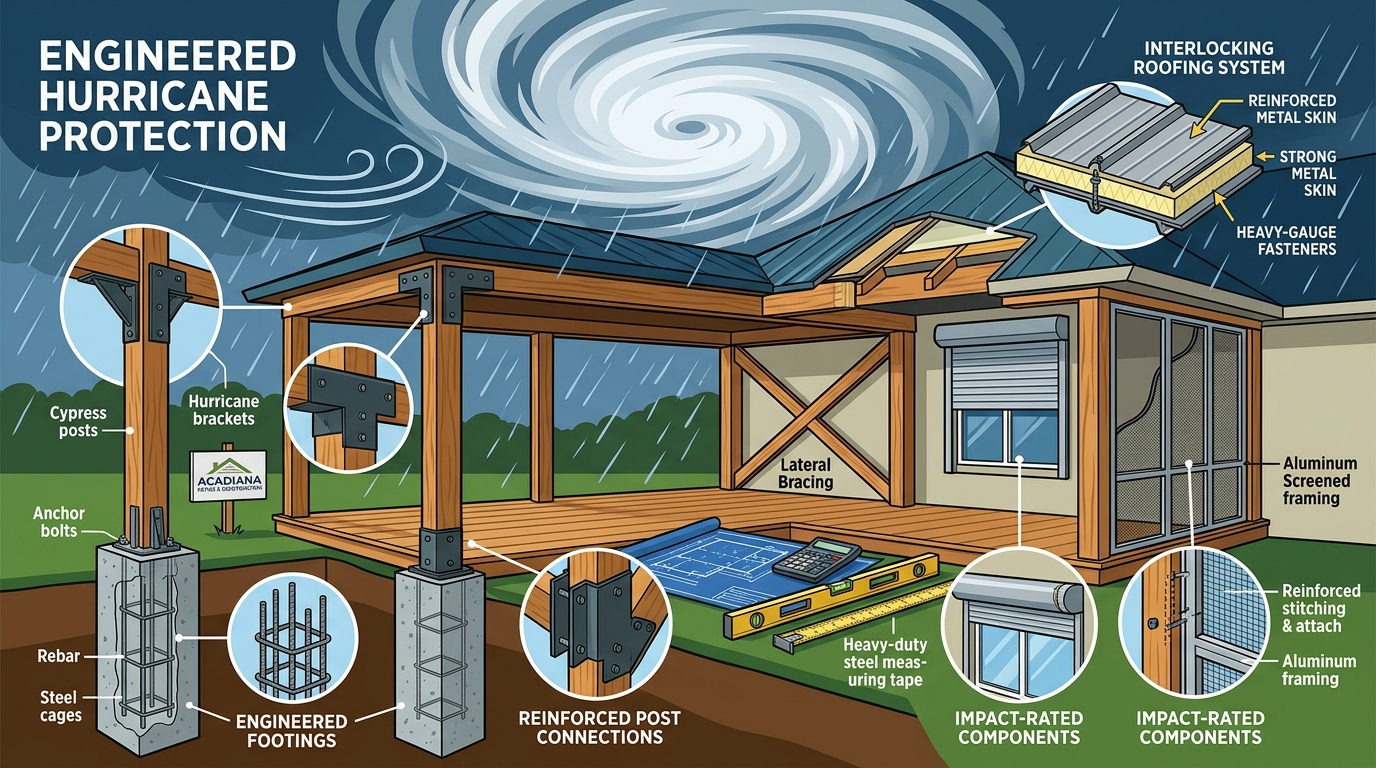
It is vital to distinguish between standard patio covers and hurricane-rated structures. Standard covers may suffice for mild climates. In Acadiana, you need structures rated for high-velocity winds. This involves using thicker gauge aluminum or reinforced steel. It also requires specialized anchoring systems that dig deep into the concrete slab. Without these engineering safeguards, your outdoor investment becomes a dangerous projectile during a hurricane.
Material Selection for Coastal Durability
The choice of material dictates the lifespan of your outdoor structure. Acadiana’s humid, salty air accelerates corrosion. Therefore, material selection is a critical component of hurricane protection. Aluminum is the industry standard for high-end patio covers in this region. Specifically, marine-grade aluminum offers superior resistance to rust and corrosion. This material maintains its structural integrity even after decades of exposure to coastal elements.
Another critical material is cypress wood. Cypress patio covers are a traditional choice in Louisiana. Cypress contains natural oils that repel insects and resist rot. However, wood requires significant maintenance to remain hurricane-ready. It must be sealed and treated regularly to prevent warping. Warped wood can compromise the structural connection points during high winds.
We often partner with Elite, Aluminum, Inc. to provide premium materials. These manufacturers offer warranties up to 10 years. This warranty coverage is a testament to the durability of the materials. When you choose insulated patio covers, you also gain thermal benefits. These covers provide an additional layer of protection against debris impact. The insulation core adds mass to the roof, making it more resistant to uplift forces.
Ensuring Structural Integrity
Material is only half the equation. The way a structure is anchored determines its survival rate. A hurricane-rated structure must be anchored directly to the foundation. Floating or loosely attached structures are the first to fail. At Acadiana Patios & Construction, we use heavy-duty concrete anchors. These anchors are drilled into the slab and secured with high-tensile bolts.
The frame design also plays a crucial role. We utilize a truss system for larger spans. This distributes the wind load evenly across all support columns. Single-post structures are generally not recommended for hurricane zones. They lack the lateral stability required to resist twisting forces. Our cypress pavilions and pergolas are engineered with multiple support points to maximize stability.
Roofing materials must also be selected with impact resistance in mind. Standard shingles are inadequate for hurricane zones. We recommend solid roofing panels or heavy-duty polycarbonate. These materials can withstand the impact of falling branches and debris. In some cases, we install motorized shades and screens. These add an extra layer of defense against rain and wind-driven debris.
Pool Enclosures and Safety Standards
Swimming pool enclosures serve a dual purpose. They extend the swimming season and provide a barrier against storm debris. However, they must be engineered to handle the specific wind loads of the area. A pool enclosure that fails can cause significant damage to the pool structure itself. The enclosure acts as a sail during a storm. If it is not properly braced, it can collapse inward or outward.
We specialize in swimming pool enclosures that meet strict safety codes. These structures are designed to be airtight and watertight. This prevents rain from entering the pool area during a storm. It also keeps debris out, reducing cleanup time after the weather passes. The screening material used is typically heavy-gauge aluminum mesh. This mesh is resistant to tearing and puncturing.
Insulated pool enclosures offer additional benefits. They help regulate the temperature of the water. This allows for year-round swimming in Acadiana. The insulation also adds structural rigidity to the enclosure. This makes it more resistant to deformation under wind pressure. When you invest in a pool enclosure, you are investing in the long-term value of your home.
Pre-Season Maintenance Checklist
Even the most hurricane-proof structures require regular maintenance. Neglect can compromise the integrity of the structure over time. Before hurricane season begins, you should inspect your outdoor structures. Check all bolts and connections for tightness. Corrosion can weaken these connection points. If you notice any rust, treat it immediately with a rust inhibitor.
Inspect the roofing material for cracks or holes. Even small gaps can allow water intrusion. This can lead to mold growth and structural rot. For concrete patios and walkways, check for settling or cracking. Uneven concrete can indicate foundation issues. These issues can affect the stability of attached structures.
Clear debris from the roof and gutters. Accumulated debris adds weight to the structure. This weight can exceed the design limits during a storm. It can also trap moisture, leading to corrosion. If you have outdoor kitchens or fireplaces, ensure that the masonry is intact. Cracked mortar can allow water to penetrate the structure.
| Structure Type | Key Hurricane Feature | Maintenance Focus |
|---|---|---|
| Patio Covers | Wind Load Rating | Bolt Tightness |
| Sunrooms | Impact Resistance | Seal Integrity |
| Carports | Anchoring Depth | Frame Corrosion |
| Pool Enclosures | Airtight Seal | Screen Tears |
Key Takeaways
- Acadiana Patios & Construction has served Lafayette and Acadiana since 1985, providing over 30 years of experience in hurricane-resistant construction.
- Wind load calculations are critical for all outdoor structures in this region to prevent catastrophic failure during storms.
- Marine-grade aluminum and cypress wood are the primary materials used for their durability and resistance to coastal corrosion.
- Proper anchoring into concrete slabs is more important than the roof material itself for structural stability.
- Pool enclosures must be airtight and watertight to protect the pool structure from storm debris and water intrusion.
- Regular maintenance of bolts, seals, and roofing materials is essential to maintain hurricane protection standards.
- Acadiana Patios is a proud member of the Better Business Bureau with an A+ Rating and the Acadian Home Builders Association.
Frequently Asked Questions
What is the wind load rating for patio covers in Acadiana?
The wind load rating varies based on the specific location and engineering design. However, structures in Acadiana are typically rated for high-velocity winds common to the Gulf Coast. Acadiana Patios & Construction ensures all designs meet or exceed local building codes.
How does hurricane protection affect the cost of a patio cover?
Hurricane-rated structures often cost more due to the use of heavier gauge materials and reinforced anchoring systems. However, this investment protects your home from significant damage and reduces long-term maintenance costs.
Can I install a pool enclosure myself?
No, pool enclosures require professional engineering and installation. Improper installation can lead to structural failure and void warranties. Professional installers ensure the structure is anchored correctly and sealed properly.
What materials are best for hurricane resistance?
Marine-grade aluminum is the best material for hurricane resistance due to its strength and corrosion resistance. Cypress wood is also a good option if maintained properly. Both materials offer durability in the Acadiana climate.
How often should I inspect my outdoor structures?
You should inspect your outdoor structures at least once a year, preferably before hurricane season. Look for loose bolts, corrosion, and damage to roofing materials. Early detection of issues can prevent major problems.
Does Acadiana Patios offer warranties on hurricane-rated structures?
Yes, we partner with leading manufacturers to provide warranties up to 10 years on our products. This warranty covers material defects and ensures the longevity of your investment.
What is the difference between a screened enclosure and a pool enclosure?
A screened enclosure primarily keeps out insects and debris. A pool enclosure is airtight and watertight, designed to protect the pool from storm damage and extend the swimming season. Both serve different purposes in hurricane protection.
Secure Your Home Today
Do not wait for the next storm to assess the safety of your outdoor structures. Acadiana Patios & Construction is ready to help you build or upgrade your home with hurricane-resistant solutions. Our team of qualified professionals is dedicated to delivering exceptional results. We combine decades of experience with the latest engineering standards to ensure your safety.
Contact us today for a FREE Estimate. We serve the Greater Lafayette, Louisiana, and Acadiana areas. Let us help you create a functional and safe living space that withstands the test of time. Call (337) 654-4337 or visit our About Us page to learn more about our commitment to quality.