Homeowners in Louisiana face unique weather challenges that can drastically impact the usability of their outdoor spaces. According to the National Oceanic and Atmospheric Administration, the Gulf Coast region experiences significant humidity and seasonal storm activity that can limit pool usage to just a few months of the year. This environmental reality forces many property owners to choose between extending their swimming season with a pool enclosure or simply keeping bugs out with a screened enclosure. Both options add value to your home, but they serve fundamentally different purposes. Understanding the mechanical and functional differences between these two structures is critical before you commit to a renovation project.
What Is a Pool Enclosure?
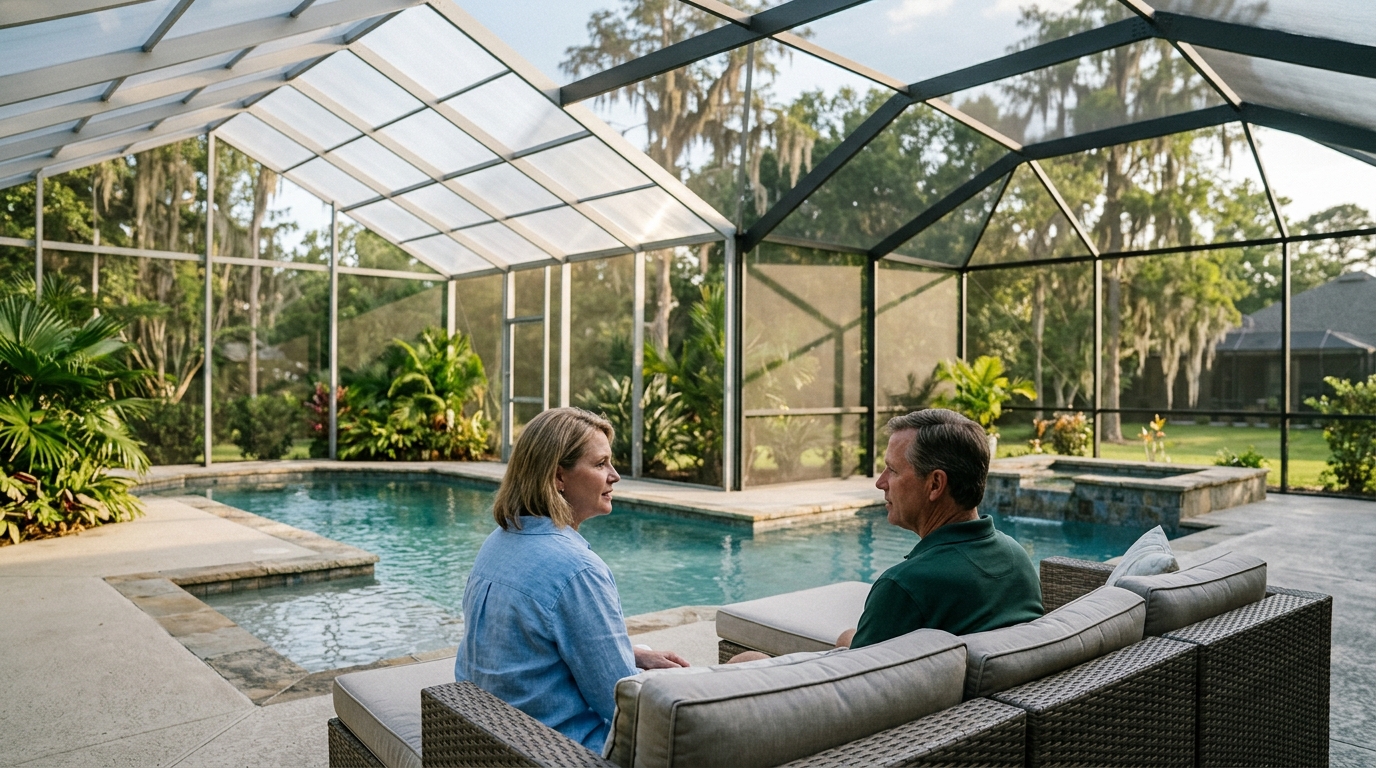
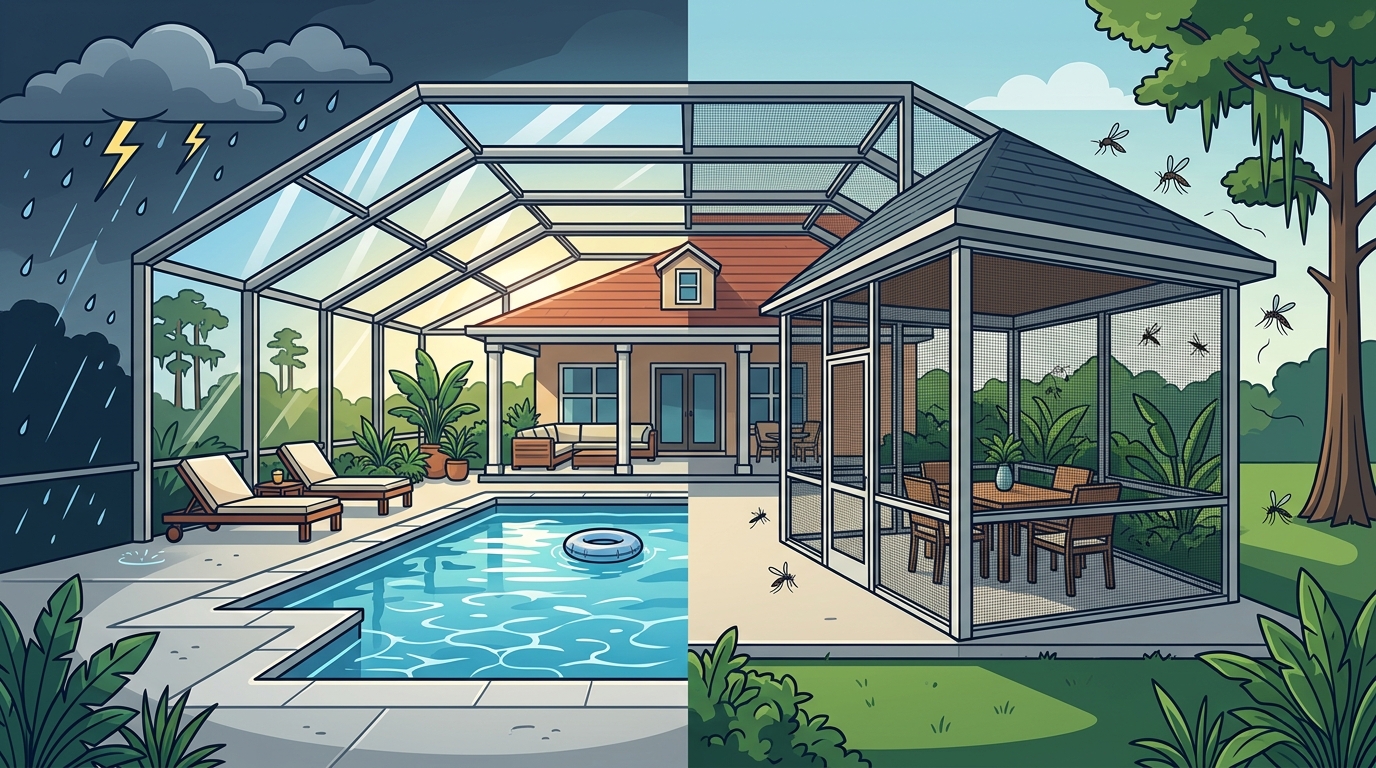
A pool enclosure is a fully sealed structure built over a swimming pool, typically constructed from aluminum framing and tempered glass or polycarbonate panels. This system creates a controlled indoor environment that protects the water and swimmers from the elements. The primary function of this structure is thermal retention. By trapping solar heat during the day, the enclosure raises the ambient temperature, allowing for swimming even when the outdoor air is cool.
These structures are engineered to withstand high winds and heavy rain, which is essential for safety in regions prone to severe weather. The sealed nature of the enclosure also prevents debris, leaves, and insects from entering the pool water. This results in significantly cleaner water and reduced chemical usage because there is less organic matter to decompose in the pool. For homeowners who view their pool as a year-round recreational asset, a pool enclosure transforms a seasonal luxury into a daily utility.
What Is a Screened Enclosure?
A screened enclosure, often referred to as a lanai or cage, is an open-air structure that surrounds the pool area with fine mesh screens. Unlike a pool enclosure, this structure does not seal in heat or block rain. Its primary purpose is to create a barrier against insects, birds, and large debris while maintaining airflow. This allows homeowners to enjoy the fresh air and natural light without the nuisance of mosquitoes or other pests.
Screened enclosures are generally more affordable than glass pool enclosures because they use less material and do not require complex thermal sealing mechanisms. They are ideal for homeowners who want to extend their swimming season by a few weeks in the spring and fall but do not need protection from cold temperatures. The open design also allows for easy ventilation, which is crucial in humid climates to prevent the buildup of stagnant, hot air around the pool deck.
Climate Control and Year-Round Usage
The most significant difference between these two options is their ability to control the microclimate around the pool. A pool enclosure acts as a greenhouse. During sunny days, the glass or polycarbonate panels allow sunlight to penetrate and heat the water and air inside. This can raise the temperature inside the enclosure by 10 to 15 degrees Fahrenheit compared to the outside air. This thermal boost is critical for extending the swimming season into the cooler months of late autumn and early spring.
In contrast, a screened enclosure offers no thermal benefit. The air inside the screened area will be the same temperature as the outside air. If it is 60 degrees Fahrenheit outside, it will be 60 degrees inside the screened enclosure. Therefore, if your goal is to swim in December or January, a screened enclosure will not provide the necessary warmth. You would still need to rely on a pool heater, which would be less efficient without the insulating properties of a sealed enclosure. The choice ultimately depends on how many months of the year you plan to use your pool.
Maintenance and Durability in Acadiana
Maintenance requirements vary significantly between the two structures. A pool enclosure requires regular cleaning of the glass or polycarbonate panels to maintain clarity and light transmission. In areas with high pollen or dust, this may mean washing the panels every few weeks. However, the enclosure protects the pool water from debris, which drastically reduces the time spent skimming leaves and brushing algae off the pool walls. The water stays cleaner for longer, reducing the load on your filtration system.
Screened enclosures require maintenance of the screen mesh itself. Over time, screens can tear, sag, or become clogged with dirt and pollen, which reduces airflow. In coastal or humid regions, salt air and humidity can accelerate the corrosion of aluminum frames if they are not properly treated. Acadiana Patios uses high-quality, corrosion-resistant materials to ensure longevity. While screened enclosures are durable, they do not protect the pool from rain. Heavy storms can still splash debris into the pool, requiring more frequent cleaning than a sealed enclosure would.
Cost and Value Analysis
Investment costs are a major factor in the decision-making process. Pool enclosures are a premium home improvement product. The cost is higher due to the specialized glass or polycarbonate materials, the complex aluminum framing, and the engineering required to ensure structural integrity against wind loads. However, the return on investment is substantial. A pool enclosure increases the usable square footage of your home by creating a new indoor room. It also protects the pool equipment and structure from UV damage and weathering, extending the lifespan of the entire pool system.
Screened enclosures are a more budget-friendly option. They provide immediate value by making the pool area more usable and comfortable. For many homeowners, the lower upfront cost makes this the more accessible choice. However, it is important to consider the long-term value. If you live in a region with a short swimming season, the additional cost of a pool enclosure may be justified by the ability to swim for an additional three to four months each year. This extended usage effectively lowers the cost per swim over the life of the structure.
Comparison Summary
| Feature | Pool Enclosure | Screened Enclosure |
|---|---|---|
| Primary Function | Thermal retention and weather protection | Insect and debris barrier |
| Season Extension | Year-round (3-4 extra months) | Minimal (few weeks in spring/fall) |
| Water Cleanliness | High (sealed from debris) | Low (open to rain and wind) |
| Maintenance | Panel cleaning, seal checks | Screen repair, frame inspection |
| Cost | Higher initial investment | More affordable entry point |
Key Takeaways
- Thermal Control: Pool enclosures trap heat, allowing for swimming in cooler weather, while screened enclosures do not affect temperature.
- Debris Protection: Enclosures keep leaves and dirt out of the water, reducing cleaning time and chemical usage significantly.
- Acadiana Expertise: Acadiana Patios & Construction has served Lafayette and surrounding areas since 1985, providing over 30 years of local experience.
- Material Quality: We use high-quality aluminum and glass/polycarbonate materials that come with warranties up to 10 years.
- Custom Design: Both structures can be customized to fit your specific pool dimensions and landscape layout.
- Property Value: Both options add value to your home, but enclosures add usable indoor square footage.
- Professional Installation: Proper installation is critical for structural integrity and warranty validity in high-wind regions.
Frequently Asked Questions
Can I swim in my pool enclosure during the winter?
Yes, one of the primary benefits of a pool enclosure is the ability to extend your swimming season. By trapping solar heat, the enclosure can raise the temperature inside by 10 to 15 degrees, making it comfortable to swim even when the outdoor air is cool.
Do screened enclosures keep out rain?
No, screened enclosures are open to the elements. They are designed to keep out insects and large debris, but rain will still fall into the pool area. If you want to keep the pool dry during rain, you need a sealed pool enclosure.
How long do pool enclosures last?
With proper maintenance, a high-quality pool enclosure can last for decades. Acadiana Patios uses premium materials that are resistant to corrosion and UV damage. We offer warranties up to 10 years on our products to ensure long-term performance.
Is a pool enclosure worth the extra cost?
For homeowners who swim year-round or want to maximize their pool usage, the answer is yes. The extended swimming season and reduced maintenance costs often justify the higher initial investment over time.
Can Acadiana Patios design a custom enclosure?
Absolutely. We specialize in custom designs that fit your specific pool shape and landscape. Our team works with you to create a structure that meets your aesthetic and functional needs.
Do I need a permit for a pool enclosure?
Permit requirements vary by locality in Louisiana. Acadiana Patios & Construction is a licensed company in Louisiana and can guide you through the permitting process to ensure your project is compliant with local building codes.
What is the difference between glass and polycarbonate enclosures?
Glass enclosures offer superior clarity and a more traditional aesthetic, while polycarbonate enclosures are lighter and more impact-resistant. Both options provide excellent thermal retention and durability.
Contact Acadiana Patios for Your Free Estimate
Choosing between a pool enclosure and a screened enclosure is a significant decision that affects your home's comfort, value, and usability for years to come. Acadiana Patios & Construction is dedicated to helping you make the right choice for your specific needs. With over 30 years of experience serving Lafayette, Louisiana, and the Acadiana region, we have the expertise to design and install a structure that meets your highest standards.
We are proud members of the Better Business Bureau with an A+ Rating and the Louisiana Home Builders Association. Our team is committed to delivering exceptional craftsmanship and customer service. Do not settle for a one-size-fits-all solution. Contact us today to schedule your FREE Estimate and discover how we can transform your outdoor living space.